
How Much Energy Does A Toaster Use: Cost & Wattage Guide
A typical toaster in a U.S. home uses about 800 to 1,500 watts while it is heating. If it runs for three minutes, it uses about 0.04 to 0.08 kilowatt-hours (kWh) of electricity. At a sample U.S. electricity rate of 16.5 cents per kWh, that costs roughly 0.7 to 1.3 cents per use.
Your exact cost depends on the toaster’s wattage, toast time, electricity rate, and how often you use it. The toaster label or owner’s manual will give the most accurate wattage.
How much electricity does a toaster use?
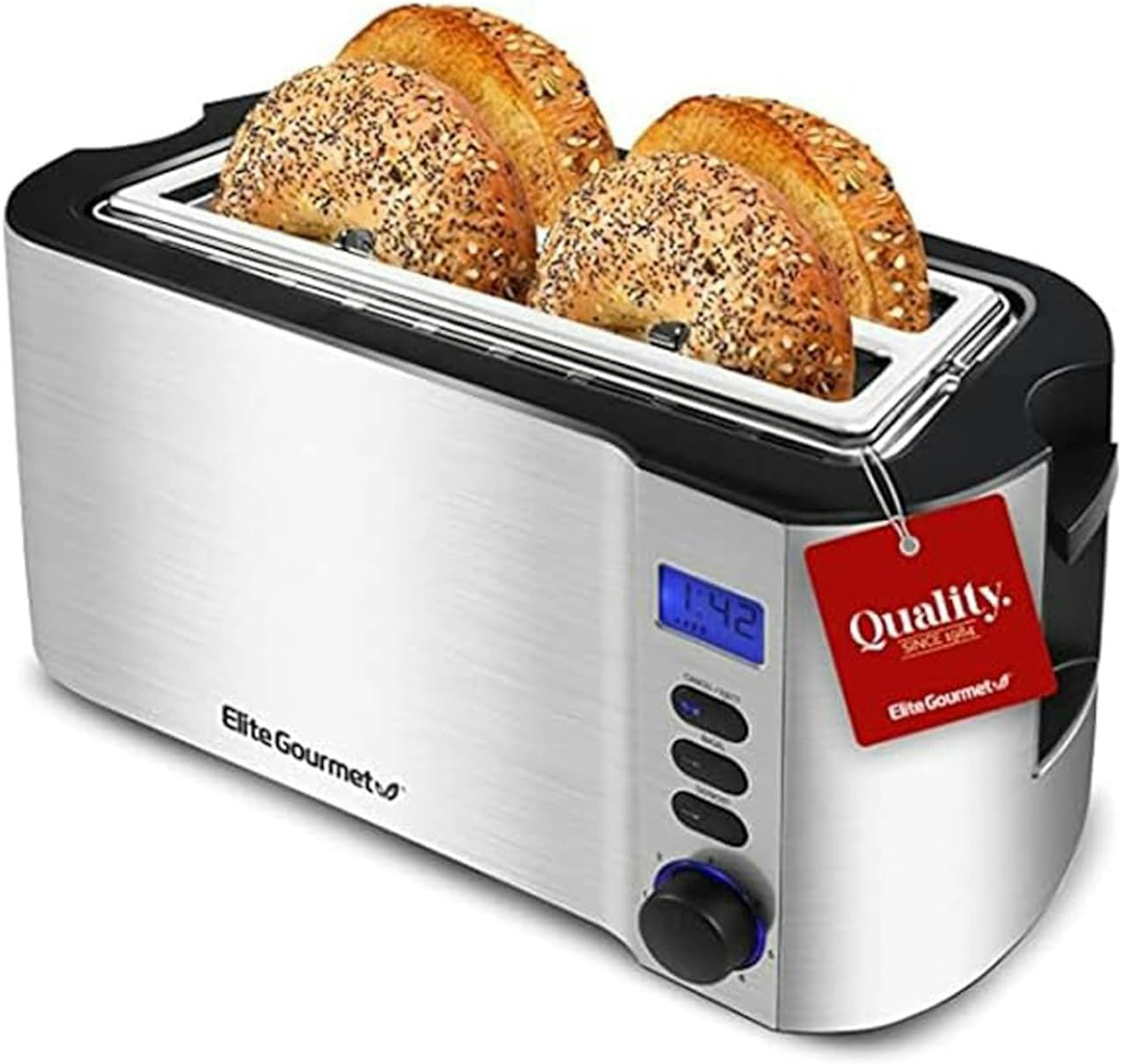
Most household toasters use 800 to 1,500 watts when the heating elements are on. A two-slice model often uses less power than a four-slice model, but size, design, and heating speed also affect the rating.
A toaster does not use its full rated power all day. It draws power only while it heats. This makes each use short, even though the power level is fairly high.
Typical toaster energy use
| Toaster power | Use time | Energy per use | Cost at 16.5¢/kWh |
|---|---|---|---|
| 800 W | 2 minutes | 0.027 kWh | 0.4¢ |
| 1,000 W | 3 minutes | 0.050 kWh | 0.8¢ |
| 1,200 W | 3 minutes | 0.060 kWh | 1.0¢ |
| 1,500 W | 4 minutes | 0.100 kWh | 1.7¢ |
| 1,500 W | 5 minutes | 0.125 kWh | 2.1¢ |
These are estimates. A toaster may cycle its heating elements on and off during a toast cycle, so measured use can be lower than a simple full-power estimate.
The sample rate of 16.5 cents per kWh is close to the U.S. residential average reported by the U.S. Energy Information Administration for 2024. Your local rate may be much higher or lower. Time-of-use plans can also change the cost by hour.
How to calculate a toaster’s energy use
Use the toaster’s watt rating and its run time to estimate energy use:
Energy used in kWh = watts × minutes ÷ 60,000
For example, a 1,200-watt toaster used for three minutes would use:
1,200 × 3 ÷ 60,000 = 0.06 kWh
To estimate the cost:
Cost = kWh used × your electricity price
At 20 cents per kWh:
0.06 × $0.20 = $0.012
That is about 1.2 cents for one three-minute cycle.
Find the toaster’s wattage
Look for a label on the bottom or back of the toaster. It may show:
- Watts, such as 1,000 W
- Voltage and amps, such as 120 V and 10 A
- A model number that can be checked in the manual
If the toaster lists volts and amps but not watts, use this formula:
Watts = volts × amps
For example, a U.S. toaster rated at 120 volts and 10 amps has a maximum power rating of about 1,200 watts.
This calculation gives the rated power. It does not prove that the heating elements draw that amount during every second of use.
How much does it cost to run a toaster?
A toaster usually costs less than two cents per use under common U.S. electricity rates. The daily cost stays small because the appliance runs for only a few minutes.
The table below shows estimated costs for a 1,200-watt toaster used for three minutes.
| Electricity rate | Cost per use | Cost for 1 use daily | Cost for 2 uses daily |
|---|---|---|---|
| 12¢/kWh | 0.7¢ | $2.63/year | $5.26/year |
| 16.5¢/kWh | 1.0¢ | $3.61/year | $7.22/year |
| 25¢/kWh | 1.5¢ | $5.48/year | $10.95/year |
| 40¢/kWh | 2.4¢ | $8.76/year | $17.52/year |
These yearly figures assume the same use every day for 365 days. They exclude taxes, fixed utility charges, and changes in electricity prices.
A simple yearly formula
To estimate your own yearly cost:
Yearly cost = watts × minutes per use × uses per day × days per year ÷ 60,000 × electricity rate
Use the electricity rate shown on your utility bill. Make sure the rate is in dollars per kWh. For example, 16.5 cents is $0.165.
A toaster can use more electricity if it needs several cycles to brown bread. It can also use less if you select a short setting or toast only one slice in a four-slot model.
Does a toaster use more energy than an oven?
A toaster usually uses less total energy than a full-size electric oven for a small item, even if the toaster has a similar or higher watt rating. The main reason is that a toaster heats a small space and runs for a much shorter time.
A full-size electric oven commonly uses about 2,000 to 5,000 watts, depending on the model and heating mode. It also needs time to preheat. That makes an oven a poor match for one or two slices of toast.
A toaster oven may use more electricity than a pop-up toaster for simple toast because it heats a larger chamber. However, a toaster oven can be more useful for foods that do not fit in a pop-up toaster.
Example comparison
This is a hypothetical estimate using a 16.5-cent-per-kWh electricity rate:
| Appliance | Rated power | Run time | Estimated energy | Estimated cost |
|---|---|---|---|---|
| Pop-up toaster | 1,200 W | 3 minutes | 0.06 kWh | 1.0¢ |
| Toaster oven | 1,500 W | 10 minutes | 0.25 kWh | 4.1¢ |
| Electric oven | 3,500 W | 30 minutes | 1.75 kWh | 28.9¢ |
Actual use varies. Ovens cycle their heating elements, so the estimate based on full rated power may overstate real consumption. Still, the comparison shows why a pop-up toaster is often the lowest-energy choice for ordinary toast.
For several servings or larger foods, the best option can change. A toaster oven may finish the job without heating a large oven. The useful comparison is not just watts; it is total kWh for the whole cooking task.

What affects a toaster’s energy use?
The toaster’s wattage is only one part of the answer. These factors can change how much electricity each cycle uses.
Toast setting and cooking time
A dark toast setting usually keeps the elements active longer. A light setting may finish sooner. The exact time depends on the model and the bread.
If the toaster draws 1,200 watts, adding two minutes to the cycle adds about:
1,200 × 2 ÷ 60,000 = 0.04 kWh
At 16.5 cents per kWh, that extra time costs about 0.7 cents.
Number of slots and slices
A four-slice toaster may have a higher watt rating than a two-slice toaster. But it can be efficient when it replaces two separate cycles.
The key question is whether the model heats all slots at once and how much power it draws in that mode. Check the label or manual for the rated wattage.
Bread moisture and thickness
Thick, cold, or moist bread may need more time to reach the same level of browning. Frozen bread can also change the cycle. Some models have a frozen setting that adds time.
These changes usually affect energy by fractions of a cent per use. They matter more when the toaster is used many times each day.
Heating-element cycling
Many toasters control heat by switching the elements on and off. The rated wattage describes the maximum or nominal draw, not necessarily the average draw over a full cycle.
A plug-in energy meter can measure actual energy use. Use one that is rated for the toaster’s voltage and current. Do not open or modify the toaster to measure it.
Standby power
A basic pop-up toaster often has little or no meaningful standby use because its main heating circuit activates only when the lever is pressed. Electronic controls, displays, or connected features may draw some standby power.
Unplugging a toaster after use can remove standby draw, but the larger safety issue is the toaster’s condition and location. Never leave a toaster near water or use a damaged cord.

Is a toaster energy-efficient?
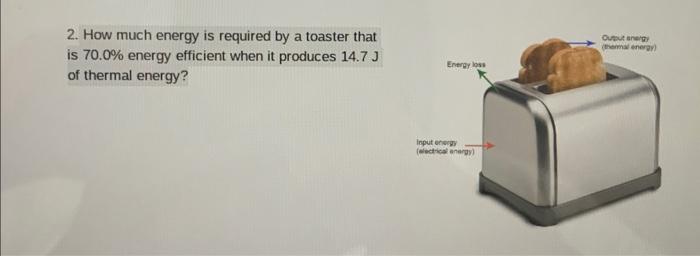
For making toast, a pop-up toaster is generally an efficient choice because it heats a small area for a short time. It is especially practical when compared with preheating a full-size electric oven for one or two slices.
“Energy-efficient” does not mean that every toaster uses the same amount of electricity. A high-wattage model may finish faster, while a lower-wattage model may run longer. Total energy depends on both power and time.
When comparing toasters, look at:
- Rated wattage
- Typical cycle time
- Number of slices made per cycle
- Whether the toaster has useful controls or features
- Condition of the cord, plug, lever, and heating elements
Do not select a toaster only because it has the lowest watt rating. A model that needs much longer to toast may not use less energy overall.
Ways to reduce toaster energy use
You can lower energy use without changing how you toast by:
- Toasting the needed number of slices in one cycle when the model allows it.
- Using the shortest setting that gives the result you want.
- Avoiding repeated cycles caused by an incorrect setting.
- Using a toaster instead of a full-size oven for small portions.
- Keeping crumbs cleared according to the manufacturer’s instructions.
- Replacing a toaster with damaged wiring or unreliable controls.
Crumbs can affect operation and create a fire hazard. Unplug the toaster and let it cool before cleaning it. Follow the manual, and do not insert metal objects into the slots.
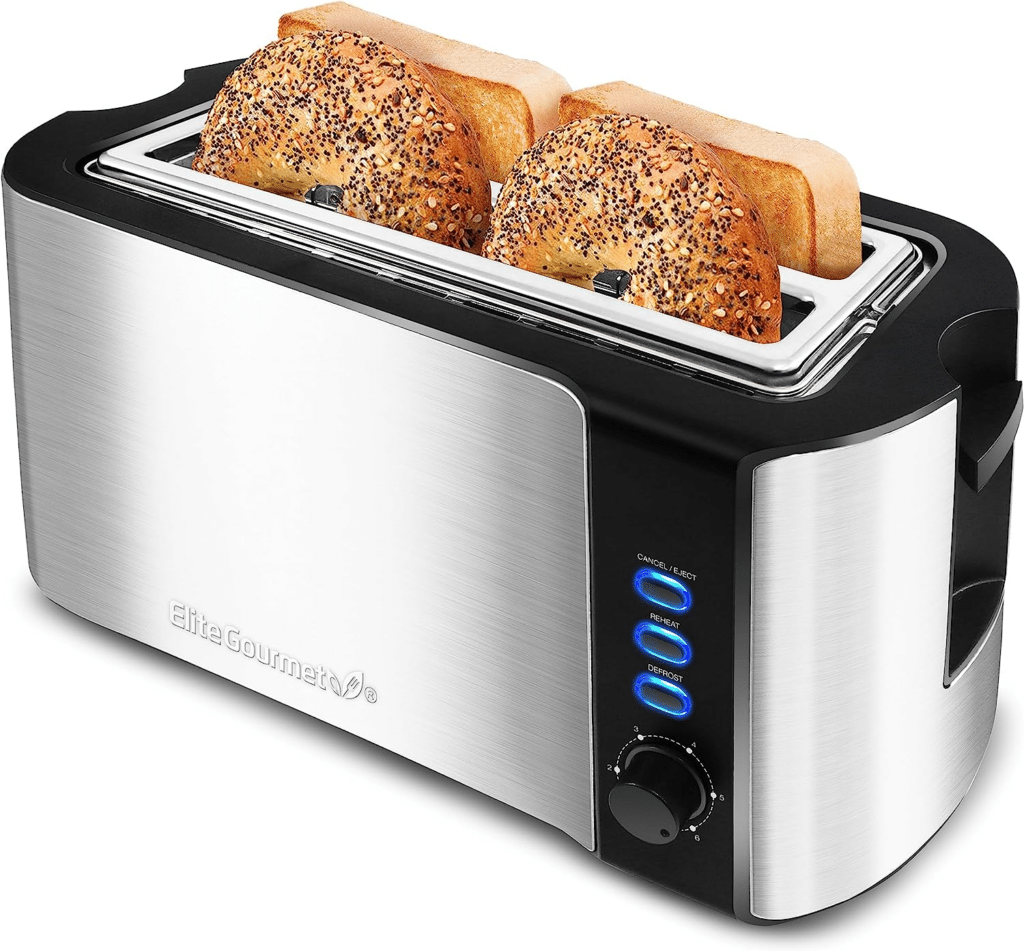
Is it safe to leave a toaster plugged in?
A toaster should be used on a stable, dry surface and kept clear of curtains, paper, and other items that can burn. The U.S. Consumer Product Safety Commission advises consumers to unplug small appliances when they are not in use when practical, especially appliances that produce heat.
Do not use a toaster if you notice:
- A frayed or hot power cord
- Sparks, smoke, or a burning smell
- A cracked plug
- A lever that sticks
- Heating elements that stay on
- A damaged housing
- Repeated tripping of a circuit breaker
Do not use a knife, fork, or other metal tool to remove stuck bread while the toaster is plugged in. Unplug it first, allow it to cool, and follow the manufacturer’s instructions. If the bread cannot be removed safely, replace the appliance or ask a qualified repair professional.
Most household receptacles in the United States supply about 120 volts. A toaster’s high wattage is normal, but it still needs a sound outlet and cord. Avoid plugging several high-power heating appliances into the same outlet or power strip.

How to measure the exact energy use of your toaster
A plug-in electricity meter can give a better estimate than the wattage label. This is useful when the toaster has electronic controls or when you want to compare different models.
Follow these steps:
- Check the meter’s voltage and current rating.
- Plug the meter into a suitable wall outlet.
- Plug the toaster into the meter.
- Reset the meter’s energy reading.
- Run a normal toast cycle.
- Record the watt-hours or kWh shown.
- Repeat the test at the same setting if you want an average.
Use the meter only as directed. Stop if the plug, outlet, or meter becomes hot, smells unusual, or shows signs of damage.
A measured result can differ from the estimate because the toaster cycles its heating elements. Test the same number of slices, bread type, and browning setting if you are comparing models.
Common mistakes when estimating toaster electricity use
The most common mistake is confusing watts with watt-hours.
- Watts measure the rate of electricity use.
- Watt-hours measure the amount used over time.
- Kilowatt-hours are the units on most U.S. electric bills.
A 1,200-watt toaster does not use 1,200 kWh in one hour. If it runs for three minutes, the simple maximum-power estimate is only 0.06 kWh.
Another mistake is using the toaster’s maximum wattage as its exact average use. The heating elements may cycle off during part of the toast cycle.
It is also easy to compare a toaster with an oven by wattage alone. Compare the full task instead: preheat time, cooking time, food quantity, and total energy used.
Frequently asked questions
How many watts does a toaster use?
Most household toasters use about 800 to 1,500 watts while heating. Check the product label or manual for the exact rating.
How much does it cost to run a toaster for 10 minutes?
A 1,200-watt toaster running for 10 minutes uses about 0.20 kWh. At 16.5 cents per kWh, that costs about 3.3 cents. A toaster may cycle its elements, so actual use can be lower.
Does a toaster use electricity when it is not running?
A basic toaster usually uses little or no meaningful power when inactive. Models with electronic displays or connected functions may use standby electricity. Unplugging the toaster removes that possible draw.
Is a toaster cheaper to run than a toaster oven?
For one or two slices, a pop-up toaster will often use less electricity because it heats a smaller area for less time. A toaster oven may be more practical for larger foods or several portions.
How can I find my toaster’s exact energy use?
Use the wattage and run time for an estimate, or measure the appliance with a properly rated plug-in energy meter. Test the toaster under normal conditions for a useful result.
Key takeaways
- A typical U.S. toaster uses 800 to 1,500 watts while heating.
- A three-minute cycle commonly uses about 0.04 to 0.08 kWh.
- One use often costs less than two cents, depending on your electric rate.
- Use watts × minutes ÷ 60,000 to estimate kWh.
- A pop-up toaster is usually a lower-energy choice than a full-size oven for a small amount of toast.
- The label gives rated power, but a plug-in meter can show actual energy use.
- Unplug a damaged toaster and never use metal objects to remove stuck food.
Conclusion
A toaster uses a small amount of total energy because it runs for only a few minutes. For most U.S. households, the cost of one toast cycle is about one cent, although local electricity rates and toaster settings can change that figure.
To calculate your own cost, find the toaster’s wattage, time one cycle, and apply the kWh formula. Use a toaster for small portions, keep it clean and undamaged, and unplug it when practical.