
Aroma Rice Cooker Not Working? (Causes and Fixes)
If your Aroma rice cooker is not working, don’t rush to buy a replacement just yet. Most issues stem from simple electrical snags, improper settings, or sensor malfunctions that can be fixed at home in minutes. By following our step-by-step diagnostic guide, you can get your kitchen back to making perfect fluffy rice tonight.
There is nothing quite as frustrating as coming home after a long day, hungry and ready to eat, only to find your Aroma rice cooker not working. You press the button, the lights stay dim, or worse the rice is sitting there, hard and crunchy, hours later. It feels like a kitchen catastrophe, but before you toss your trusty appliance into the bin, take a deep breath. In most cases, these devices are incredibly durable and suffer from very minor, fixable ailments.
As we move through 2026, technology in our kitchens has improved, but the core mechanics of a rice cooker remain straightforward. Whether you have a digital multi-cooker or a simple one-touch pot, the system relies on heating elements, sensors, and basic circuits. Most of the time, when you find an Aroma rice cooker not working, it is just a sign that it needs a little maintenance or a quick checkup rather than a full retirement.
Key Takeaways
- Check Power First: Always verify your power source, outlet, and power cord before assuming the unit is broken.
- The Thermal Fuse: Many Aroma rice cooker not working issues are caused by the internal thermal fuse, which is a safety mechanism.
- Sensor Cleanliness: A dirty or food-encrusted temperature sensor at the bottom of the heating plate is the most common cause of undercooked rice.
- Ratio Matters: Sometimes the device is fine, but the water-to-rice ratio or the choice of grain type is the actual problem.
- Resetting the Unit: Simple digital resets or unplugging the device for ten minutes can often clear minor electronic glitches.
1. The Electrical Basics: Where to Start
Before you start digging into the internal components, we must cover the electrical basics. It sounds basic, but you would be shocked at how many “broken” cookers are simply not plugged in properly or are attached to a tripped GFCI outlet.
Testing the Power Connection
First, check the power cord. These cords often have a magnetic connection to the base of the unit to ensure safety. If this has been bumped, it might have detached slightly. Push it firmly into the base. If you are using an extension cord, stop. Rice cookers draw a lot of power, and high-wattage appliances should always be plugged directly into the wall outlet.
Checking Your Kitchen Outlets
If the display is dark or the “cook” light won’t turn on, try plugging a different appliance like a toaster or a phone charger—into the same outlet. If the other device does not work, you have a tripped breaker or a dead outlet. Reset your circuit breaker box and try again. If the outlet works fine but the cooker does not, we need to look at the unit itself.
2. Troubleshooting Cooking Performance Issues
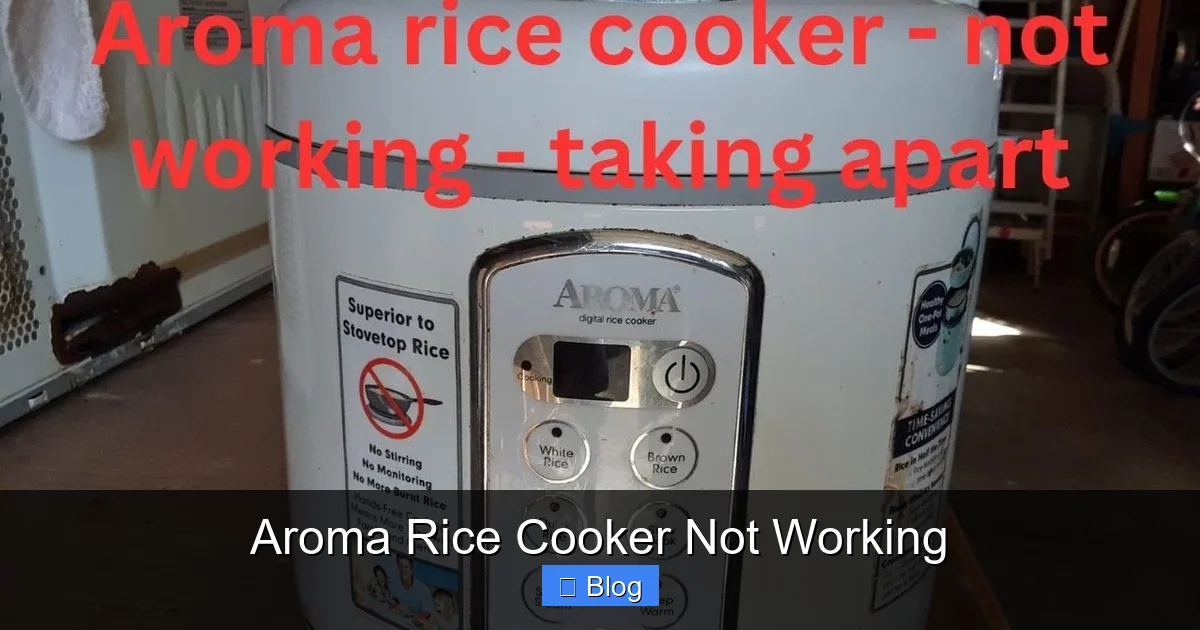
Sometimes the Aroma rice cooker is not working in the sense that it is turning on, but the food comes out wrong. This is usually not an electrical fault, but a sensor or user error. If your rice is mushy, burnt, or crunchy, here is what is going on.
Visual guide about Aroma Rice Cooker Not Working
Image source: i.ytimg.com
The Temperature Sensor Plate
Right in the center of the heating base, you will see a small, spring-loaded sensor. This is the heart of your cooker. It measures the temperature of the inner pot to know when to switch from “cook” to “warm.” If a piece of rice, debris, or dried starch gets stuck under this plate, the sensor cannot make contact. This confuses the computer, leading to burnt bottoms or undercooked grains. Take a damp cloth and gently wipe the sensor and the bottom of your inner pot to ensure a perfectly clean contact surface.
Understanding Rice Ratios
In 2026, many of us are experimenting with different grains like quinoa, farro, or brown rice. The “Rice” button on your Aroma is calibrated for standard white rice. If you are cooking a grain that takes longer to absorb water, the unit might finish its cycle before the grain is done. If you find your Aroma rice cooker not working with specialty grains, try adding a splash more water or using the “Slow Cook” or “Steam” setting if your model includes those features.
3. Digital Display and Software Glitches
If you own one of the newer digital Aroma models, you might encounter a “E1” or “E2” error code. These look intimidating, but they are just the machine’s way of communicating a problem. Usually, these codes indicate that the internal temperature sensor has either shorted out or become disconnected.
How to Reset the Microprocessor
Digital cookers are essentially small computers. Just like your laptop or phone, they can sometimes experience a “hiccup.” To fix this, perform a hard reset. Unplug the device from the wall and leave it completely disconnected for at least ten to fifteen minutes. This allows the internal capacitors to discharge fully and the software to clear its current state. Plug it back in and select your program again.
Interpreting Error Codes
If the error code persists after a reset, check your manual or the Aroma website. Usually, an “E” code means that the unit has detected an internal overheat or a sensor failure. If the unit is still under warranty, do not attempt to open the casing. Aroma has a very helpful support team that can assist you if the unit is genuinely defective.
4. The Thermal Fuse: When Silence is the Problem
If you plug in your cooker and absolutely nothing happens—no lights, no beeps, no heat—you might be dealing with a blown thermal fuse. This is a safety component designed to break the circuit if the device gets dangerously hot. It is a one-time-use safety mechanism.
Identifying Fuse Failure
If you are tech-savvy and comfortable with a screwdriver, a blown fuse is often the culprit for a completely “dead” unit. However, please note that opening the base of the unit will void your warranty. If you are past your warranty period, you can often find replacement thermal fuses online. If you are not comfortable working with live electronics, it is much safer to contact a professional repair person or consider a new unit.
Preventing Overheating
Why do these fuses blow? Often, it is because of moisture buildup inside the base. Never wash the base of the unit under running water. Always wipe it with a cloth. If water spills into the vents at the bottom, it can cause a short circuit or blow the fuse when you turn it on.
5. Maintenance Tips for Longevity
The best way to fix an Aroma rice cooker not working is to prevent the issues before they start. By following a few simple habits in 2026, you can keep your machine running for years.
- Clean the Inner Pot Carefully: Even if your pot is non-stick, use plastic or silicone utensils. Scratches on the bottom can cause uneven heating and trigger the sensor incorrectly.
- Ventilation: Ensure the steam vent on the lid is clear of blockages. A clogged vent can cause the pressure to build up improperly, leading to the device shutting off early.
- Keep the Exterior Dry: Before you place the inner pot into the cooker, wipe the outside of it completely dry. A wet outer pot can cause electrical interference or damage the heating element.
- Store Properly: When not in use, keep the lid slightly ajar if possible, or ensure it is completely dry so you don’t trap stale moisture inside.
6. When is it Time to Replace?
Sometimes, we have to be realistic. If your cooker is ten years old, has been dropped, or has suffered from water damage to the internal motherboard, it might be time to move on. If the cost of the repair parts plus your time exceeds the cost of a new, updated Aroma model, it is a smarter investment to upgrade.
Modern Aroma cookers in 2026 come with even better energy efficiency and more precise sensors than the models from a few years ago. If you find your current Aroma rice cooker not working despite your best efforts, look at it as an opportunity to get a unit with new features, such as faster cooking times or enhanced “keep warm” technology.
In conclusion, a rice cooker is one of the most reliable workhorses in your kitchen. When it stops working, it is rarely a reason for alarm. By checking the power, cleaning the sensors, and resetting the electronics, you will likely find yourself back to making perfect rice in no time. Stick to these steps, keep the unit clean, and your appliance will continue to feed you and your family for years to come.
Frequently Asked Questions
Why does my rice cooker turn off before the rice is done?
This usually happens because the sensor detects that the water has been absorbed or evaporated, but if the rice is still hard, it means your ratio was off. Try adding a little extra water next time or checking that the bottom of the pot is perfectly clean so the sensor can read the heat properly.
Can I wash the rice cooker base in the sink?
Absolutely not! The base contains electrical components and heating elements that will be ruined by water, leading to a dangerous short circuit. Always wipe the base with a damp cloth and only submerge the inner pot and accessories.
What should I do if the “Cook” light won’t stay on?
If the button pops back up immediately, the internal switch might be blocked or the inner pot isn’t sitting flat. Ensure the pot is clean, dry, and properly seated, then press the button firmly to lock it into the “Cook” position.
Is it safe to use an extension cord with my Aroma rice cooker?
It is generally recommended to plug the rice cooker directly into a wall outlet. Rice cookers require high wattage, and using an inadequate extension cord can cause the device to underperform or even pose a fire hazard.
How do I fix a burnt bottom on my rice?
Burnt rice usually happens because the sensor at the bottom is dirty or the inner pot has been scratched, causing heat to transfer unevenly. Clean the sensor plate with a soft, damp cloth and ensure you are using the correct amount of water for your specific rice type.
Are Aroma rice cooker parts replaceable?
Yes, many components like the inner pot, steam tray, and measuring cups can be replaced by ordering them directly from the Aroma website. However, internal electronic parts are generally not user-replaceable for safety reasons.