How To Throw Away A Toaster: Safe Disposal Guide
The best way to throw away a toaster in the United States is to donate it if it still works, recycle it through an approved small-appliance or electronics program if it does not, and use the regular trash only when your local waste agency allows it. Do not place a toaster in a curbside recycling bin unless your program specifically accepts small appliances.
A toaster contains metal, plastic, wiring, and electronic parts. Some parts can be recovered, but recycling rules differ by city, county, and state. Check your local waste authority before putting the appliance out for collection.

Key Takeaways
- Working toaster: Donate, give away, or sell it after cleaning and testing it.
- Broken toaster: Look for a small-appliance, scrap-metal, or electronics recycling program.
- Curbside recycling: Use it only if your local program lists toasters as accepted items.
- Trash: Use this option only when local rules permit it.
- Damaged cord or fire damage: Do not test or donate the toaster. Keep it unplugged and ask your waste agency about safe disposal.
- Never burn, crush, or dismantle a toaster to remove its parts.
1. Check Whether the Toaster Still Works
Test the toaster only if it appears safe. A working appliance is usually easier to reuse than to recycle.
Before testing, inspect these parts:
- Power cord and plug
- Outer case
- Lever and buttons
- Toasting slots
- Heating elements
- Signs of melting, smoke, burning, or water damage
If the cord is frayed, the plug is cracked, the body is melted, or the toaster has smoked, do not plug it in. A toaster with electrical damage may create a shock or fire risk.
If it is safe to test, plug it directly into a wall outlet. Do not use a damaged extension cord or power strip. The toaster should heat, release the toast, and shut off without smoke, sparks, burning smells, or unusual sounds.
If the toaster works
You can:
- Clean out loose crumbs after unplugging and cooling the toaster.
- Wipe the outside with a slightly damp cloth.
- Let it dry fully.
- Offer it to a local charity, community group, neighbor, or reuse center.
- Disclose any known defects or missing parts.
Do not donate an appliance that is unsafe simply because it still turns on.
If the toaster does not work
Do not place it in a donation box. Move to the recycling or disposal steps below.

2. Find a Toaster Recycling Program Near You
The most responsible way to dispose of a broken toaster is to find a program that accepts small appliances, electrical items, or scrap metal.
Start with these sources:
- Your city or county solid-waste department
- Your state environmental agency
- A household hazardous-waste facility
- A local electronics recycling center
- A scrap-metal recycler
- A retailer or manufacturer take-back program
- A community cleanup or special recycling event
Search using your location and one of these phrases:
toaster recycling near me[city or county] small appliance recycling[state] electronics recycling[city] scrap metal drop-off[county] household waste facility
Confirm the rules before you travel. Ask whether the facility accepts:
- Plug-in toasters
- Toaster ovens
- Appliances with plastic parts
- Appliances with attached power cords
- Small electrical appliances without batteries
A facility may accept metal appliances but reject items with electronics, food residue, or mixed materials. Local rules control.
The U.S. Environmental Protection Agency provides information about managing used electronics and finding responsible recycling options. Your local waste agency remains the best source for collection rules in your area.

3. Prepare the Toaster for Recycling or Disposal
Prepare the toaster without taking it apart. Most facilities prefer the appliance intact.
Follow these steps:
- Unplug the toaster.
- Let it cool completely if it was recently used.
- Remove loose crumbs over a trash can.
- Empty the crumb tray, if the model has one.
- Wipe away grease or food residue.
- Remove detachable plastic parts only if the facility tells you to do so.
- Coil the cord loosely around the appliance or secure it without cutting it.
- Place the toaster in a box or bag if you need to transport it.
- Keep it dry until drop-off.
Do not wash the toaster under running water. Moisture can remain inside the housing and create a shock or fire risk.
Do not open the case to remove the heating wires, circuit board, or metal frame. The internal parts may have sharp edges, and dismantling the appliance can make recycling harder. It can also expose you to electrical components or insulation that should be handled by a recycling facility.
What to do with the power cord
Leave the cord attached unless the recycling center gives different instructions. Some scrap-metal facilities may have separate rules for insulated wire. Never cut the cord while the toaster is plugged in, and never cut it merely to make the appliance fit in a bin.

4. Decide Between Recycling, Scrap Metal, and Trash
Use the table below as a general guide. Your local program may use different rules.
| Toaster condition | Best first option | Backup option |
|---|---|---|
| Clean and working | Donate, sell, or give away | Reuse center |
| Working but unwanted | Charity or community reuse program | Small-appliance recycling |
| Broken with mostly metal parts | Small-appliance or scrap-metal recycler | Local trash, if allowed |
| Damaged cord, melted case, or fire damage | Ask the waste agency for handling instructions | Approved disposal facility |
| Toaster oven with electronic controls | Electronics or small-appliance program | Local transfer station |
| Appliance with a built-in battery | Electronics or battery program | Follow local battery disposal rules |
Can you put a toaster in the recycling bin?
Usually, no. Curbside recycling systems are designed for accepted containers and other listed materials. A toaster can jam sorting equipment, contaminate a load, or be sent to a facility that cannot process it.
Only place a toaster in the curbside bin if your hauler or local recycling guide clearly lists small electrical appliances as accepted.
Can you put a toaster in the garbage?
Sometimes. Many local waste systems allow small appliances in household trash, while others require drop-off or special collection. A toaster should not go into the trash if your local rules prohibit electrical appliances.
Before using the trash:
- Check your city, county, or hauler’s appliance rules.
- Make sure the toaster is unplugged and cool.
- Wrap or box sharp or broken parts.
- Do not place it in a garbage bag with liquid or wet waste.
- Follow collection limits for size and weight.
Trash is often the least preferred option because it sends recoverable metal and plastic to a landfill. It may still be the correct legal option when no local recycling route exists.
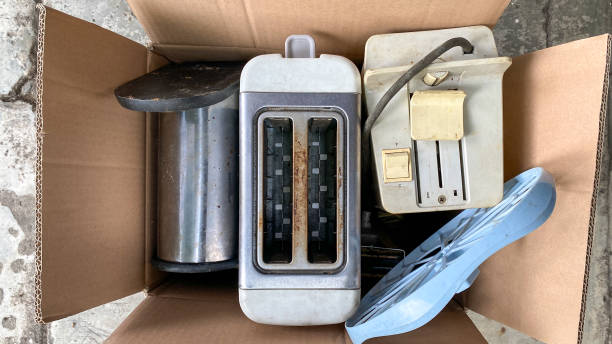
5. Dispose of a Toaster Oven Correctly
A toaster oven is larger and may include more parts than a basic pop-up toaster. It can have:
- Metal panels
- Glass in the door
- Heating elements
- A timer or electronic controls
- Plastic knobs
- Insulation
- A removable tray or rack
Use the same general process: reuse it if safe, then check for small-appliance or electronics recycling.
Do not assume that a toaster oven belongs in an oven or large-appliance program. Some waste facilities classify it as a small appliance, while others classify it as electronic waste. Ask before drop-off.
Remove the rack and tray only if the facility provides separate instructions. Clean food and grease from the interior, but do not spray water into the controls or heating areas.

6. Handle a Toaster With Fire or Water Damage
A toaster with fire damage needs extra care. Do not donate it, test it, or place it in a recycling bin without checking first.
Keep the appliance unplugged and away from flammable materials. If the toaster recently caught fire, melted, or produced heavy smoke, contact your local fire department or waste authority for disposal advice. They can tell you whether the item requires special handling.
For water damage, do not plug in the appliance to “see if it still works.” Water may remain inside the case. Treat it as a broken electrical appliance and use an approved recycling or disposal route.
If the toaster is hot, smoking, sparking, or actively burning, leave the area and call 911. Do not use water on an energized electrical appliance.

7. Avoid These Common Toaster Disposal Mistakes
Several disposal methods can create safety or environmental problems.
Do not burn the toaster
Burning can release smoke from plastic, coatings, insulation, and electrical materials. It can also leave sharp metal and contaminated ash.
Do not bury it
A landfill or disposal site must manage waste under local rules. Burying an appliance on private property can contaminate soil and may violate local law.
Do not strip it with household tools
The case may have sharp edges. Internal wiring and electronic parts are better handled by a recycler with the right equipment.
Do not donate unsafe appliances
A donation center may refuse a toaster with a damaged cord, exposed wire, smoke damage, or a broken safety mechanism. Be honest about the appliance’s condition.
Do not leave it beside a full recycling bin
An appliance placed next to a collection bin may be treated as illegal dumping. The site may not accept it, and workers may need to move it by hand.
Do not assume all “electronics recycling” programs accept toasters
Some programs accept computers, phones, and televisions but not kitchen appliances. Confirm the accepted-item list first.
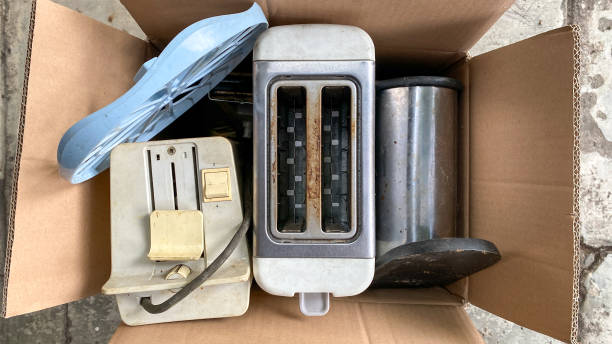
8. What To Do if You Cannot Find a Recycling Option
If no nearby program accepts toasters, contact your local solid-waste office or private waste hauler. Ask for the correct option for a small plug-in kitchen appliance.
You can also ask about:
- Annual household cleanup days
- Transfer-station drop-off
- Bulky-waste collection
- Scrap-metal drop-off
- Manufacturer take-back
- Retailer recycling events
- Repair or reuse groups
If the waste authority confirms that regular trash is allowed, place the toaster out according to collection rules. Do not put it out early, leave it beside a public bin, or mix it with prohibited waste.
A good disposal decision has three parts: safe condition, accepted facility, and local permission. If any one of these is missing, pause and verify the next step.

How Much Does Toaster Disposal Cost?
The cost depends on your location and the facility. Common possibilities include:
- Free donation
- Free municipal drop-off
- Free retailer or community recycling event
- A small fee at a private recycling center
- A standard transfer-station or bulk-waste fee
- Free household trash collection where permitted
Do not rely on a national price because waste fees vary by county, facility, and program. Ask about the fee before visiting a private recycler.
Can You Recycle the Metal From a Toaster?
Yes, a recycler may recover metal from a toaster. However, that does not mean the toaster belongs in a curbside recycling bin.
A scrap-metal or appliance recycler can separate materials with equipment designed for mixed items. The facility may remove steel, aluminum, copper wire, plastic, and electronic components. The exact recovery process depends on the appliance and the facility.
Leave the toaster assembled unless the recycler gives you specific preparation instructions.
Can You Put a Toaster in a Dumpster?
Do not use a commercial, apartment, construction, or public dumpster unless the owner or waste company confirms that small appliances are allowed. Some dumpsters prohibit electrical equipment, and others are intended only for specific waste types.
Using a dumpster without permission can lead to rejected service, extra fees, or illegal-dumping problems. A local drop-off center is usually a better choice.
Should You Remove the Crumb Tray Before Disposal?
Remove and empty the crumb tray if it comes out easily. Loose crumbs can attract pests and make handling unpleasant.
Do not force a stuck tray. Do not remove internal panels to clean the toaster. If the tray is difficult to remove, leave it in place and tell the recycler that the toaster contains food residue or a stuck part.
Do Toasters Contain Batteries?
Most basic pop-up toasters do not contain rechargeable batteries. Some newer or specialized kitchen appliances may include electronic controls, displays, or other components. Check the product manual or contact the manufacturer if you are unsure.
If the appliance contains a removable battery, follow your local battery-recycling rules. Do not place lithium-ion batteries in household trash or curbside recycling.
Final Recommendation
To throw away a toaster in the USA, first decide whether it is safe and still useful. Donate or give away a working toaster. For a broken toaster, contact your city, county, or waste hauler and ask for a small-appliance, electronics, or scrap-metal recycling option. Use regular trash only when your local rules allow it, and never dismantle, burn, or place the toaster in curbside recycling without approval.
Sources for Local Disposal Rules
For current guidance, check:
- U.S. Environmental Protection Agency: Electronics Donation and Recycling
- Your city or county solid-waste department
- Your state environmental agency
- Your waste hauler’s accepted-materials list
- The toaster manufacturer’s support or recycling page
FAQs
Is a toaster considered electronic waste?
A toaster is an electrical appliance. Some local programs classify it as electronic waste, while others classify it as a small appliance or scrap metal. Use the category listed by your local waste authority.
Can I leave a toaster on the curb?
Only if your local collection service accepts it and its instructions allow curbside placement. Leaving it beside a bin without permission may count as illegal dumping.
Can I donate a toaster that only has a small defect?
Disclose the defect before donating it. A minor cosmetic issue may be acceptable, but a damaged cord, exposed wire, overheating problem, or failed shutoff mechanism makes the toaster unsafe to give away.
How should I transport an old toaster?
Unplug it, let it cool, empty loose crumbs, and place it in a box or bag. Keep damaged units away from clothing, paper, and other flammable items. Do not transport a hot, smoking, or actively sparking appliance.
What is the most environmentally responsible option?
Reuse is usually preferable when the toaster is safe and functional. If it is broken, use an approved small-appliance or electronics recycling program. Recycling rules and actual material recovery depend on the facility, so verify acceptance before drop-off.