How To Dispose Of A Toaster: Easy Eco-Friendly Guide
The best way to dispose of a toaster in the U.S. is to reuse, donate, repair, or recycle it through a local program. Do not place it in your curbside recycling bin unless your local recycling service says it accepts small electrical appliances. If no recycling or reuse option is available, check your city or county rules before putting the toaster in the trash.
Before disposal, unplug the toaster, let it cool fully, remove loose crumbs, and keep the power cord intact. A toaster does not contain a rechargeable battery, but it does contain electrical parts and metal that may be accepted by appliance recyclers or scrap-metal facilities.
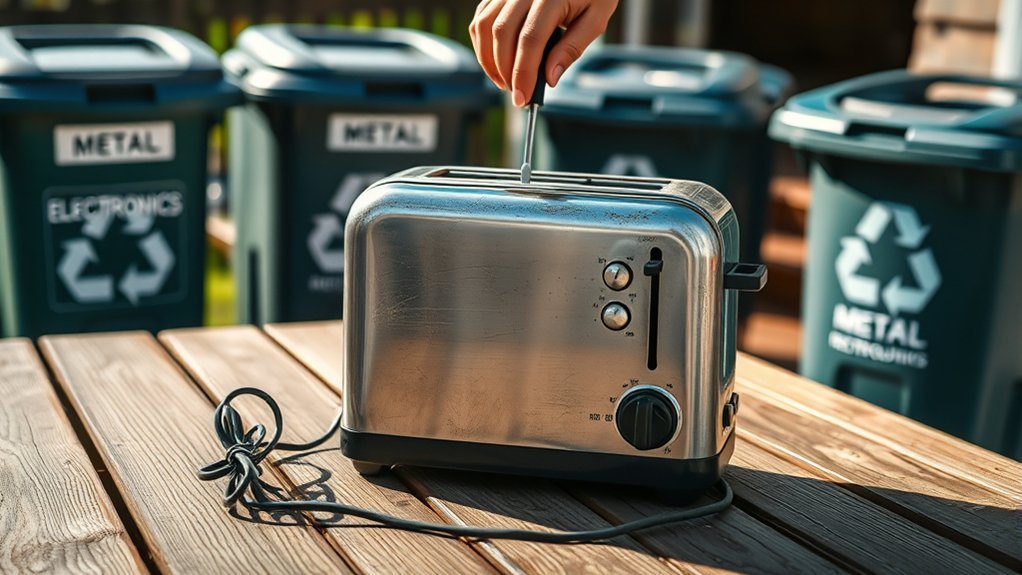
Decide Whether the Toaster Can Be Reused
A working toaster should usually be reused before it is recycled or thrown away. Donation keeps the appliance in service and avoids the need to process its metal, plastic, wiring, and electronic parts.
Consider reuse if the toaster:
- Heats evenly.
- Has an intact power cord and plug.
- Does not smell like burning plastic.
- Does not spark or smoke.
- Has working controls.
- Releases toast without sticking.
- Has no melted, cracked, or exposed parts.
Unplug the toaster and inspect it only after it has cooled. Do not test a toaster with a damaged cord, loose plug, cracked housing, or signs of overheating.
Where to donate a working toaster
Possible donation options include:
- Local thrift stores.
- Charity shops.
- Community centers.
- Shelters or transitional housing programs.
- Buy Nothing groups.
- Freecycle groups.
- Neighborhood reuse websites.
- Friends, family, or community bulletin boards.
Call before visiting. Some thrift stores accept small appliances, while others refuse them because of safety, testing, or storage limits. Describe the toaster honestly and include its brand, size, condition, and any known defect.
Do not donate a toaster that is unsafe or only works sometimes. A faulty appliance can create a shock or fire risk for the next user.

Repair the Toaster Before Replacing It
Repair may make sense when the toaster has a simple, known problem and the repair cost is low. A toaster with a damaged cord, repeated overheating, smoke, or a burned smell should not remain in use while you search for a fix.
Safe actions you can take without opening the toaster include:
- Unplug the toaster.
- Empty the crumb tray.
- Turn the toaster upside down over a sink or trash can.
- Gently shake out loose crumbs.
- Wipe the outside with a dry or slightly damp cloth.
- Let the toaster dry completely before using it again.
- Check the cord and plug for damage.
Never place a toaster under running water or submerge it. Do not spray cleaner into the slots.
When professional repair is more suitable
Ask a qualified appliance repair technician about repair when:
- The toaster is expensive or part of a matching appliance set.
- The issue may involve the cord, switch, thermostat, or heating element.
- The toaster is still under warranty.
- The appliance has sentimental or unusual value.
- A replacement would be difficult to recycle in your area.
Many low-cost toasters are not economical to repair. A repair shop may charge more for diagnosis and labor than a new toaster costs. The decision depends on the toaster’s value, repair price, safety condition, and local recycling options.

Recycle a Toaster Through a Local Program
A toaster is a small electrical appliance. It contains recyclable materials, including steel, other metals, plastic, wiring, and electrical components. However, acceptance rules differ widely across the United States.
Start with your:
- City or county solid-waste department.
- Local recycling authority.
- Household hazardous-waste program.
- Municipal transfer station.
- Electronics recycling event.
- Scrap-metal recycler.
- Appliance recycling center.
- Retailer take-back program.
Search your local government website for terms such as:
- “toaster recycling near me”
- “small appliance recycling”
- “electrical appliance disposal”
- “e-waste drop-off”
- “household recycling guide”
- “county solid waste toaster”
The U.S. Environmental Protection Agency explains that electronics recycling programs vary by location and item type. Your local program determines whether it accepts a toaster and whether preparation rules apply.
Can a toaster go in the recycling bin?
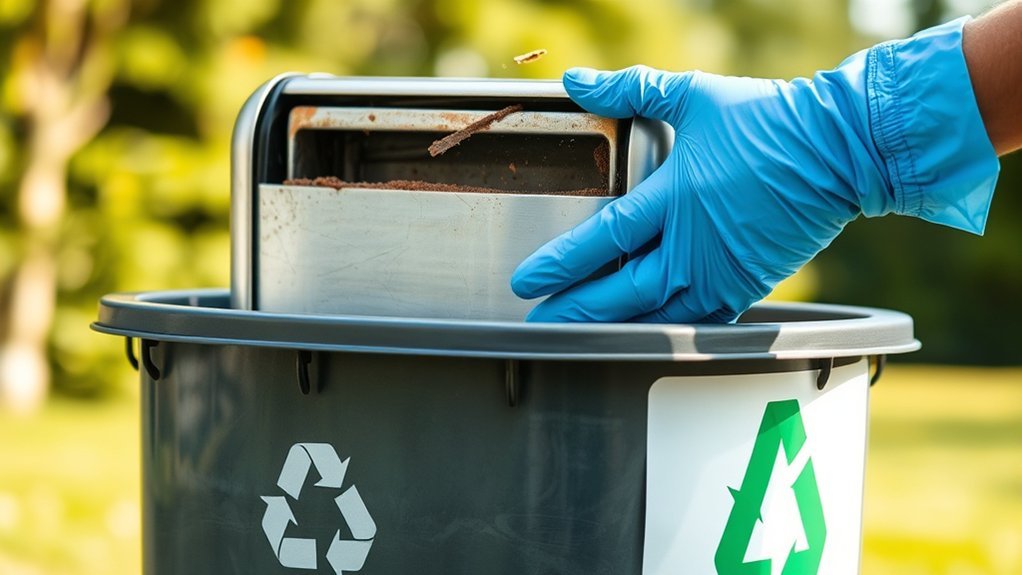
Usually, you should not place a toaster in a curbside recycling bin unless your local program specifically allows it.
A toaster can cause problems at a materials recovery facility because it may:
- Jam sorting equipment.
- Wrap around conveyor machinery.
- Damage compactors.
- Create a hazard for workers.
- Contaminate a load that is meant for bottles, cans, paper, and cardboard.
Some communities accept small appliances in curbside collection. Others require a drop-off site or special collection day. Local instructions override general advice.
What to ask a recycling facility
Before you drive to a facility, ask:
- Do you accept electric toasters?
- Is there a fee?
- Do you accept appliances with power cords?
- Must I remove the crumb tray?
- Do you accept damaged or nonworking appliances?
- Do you accept only certain brands or sizes?
- Do you require proof of local residency?
- Are drop-off hours different from normal business hours?
Keep the toaster intact unless the facility gives different instructions. Many facilities prefer whole appliances because they can process them more safely.
Use a Scrap-Metal or E-Waste Drop-Off Site
A scrap-metal dealer may accept a toaster because it contains steel and other recoverable materials. An electronics recycler may also accept it, especially if the facility handles small appliances and mixed electrical equipment.
These services are not the same everywhere. Some scrap yards accept only larger metal items. Some charge for small appliances. Others accept them only during scheduled community events.
When contacting a scrap-metal or e-waste facility, give the item’s exact description:
“I have one small electric toaster with a power cord. It contains no battery and is not leaking or damaged.”
That description helps the facility tell you whether it belongs in its appliance, metal, or electronics stream.
Do not assume that a facility accepts all e-waste. A site that handles computers and televisions may not accept kitchen appliances. Confirm before delivery.

Dispose of a Toaster in the Trash Only When Local Rules Allow It
Trash disposal may be the last available option for a broken toaster, but local waste rules still apply. Some waste companies accept small appliances in household garbage. Others require them to go to a transfer station, bulky-item area, or special collection program.
Before using the trash:
- Remove food crumbs and loose debris.
- Let the toaster cool completely.
- Wrap sharp or broken pieces if your local rules permit.
- Keep the cord from creating a loose entanglement hazard.
- Place the appliance where your waste service instructs you.
- Do not put it in a recycling cart unless specifically allowed.
Do not place a toaster in a dumpster that prohibits electrical appliances. Apartment buildings, businesses, and private waste services may have separate rules.
When trash disposal is not appropriate
Do not throw the toaster in regular trash if it:
- Is smoking or hot.
- Has a burning odor.
- Has exposed wiring.
- Has leaked another substance onto it.
- Is part of a recalled product.
- Contains an unusual battery or power pack.
- Is heavily damaged after a fire.
For an appliance that recently smoked, sparked, or caught fire, keep it away from flammable materials and ask your local fire department or waste authority for handling advice. Do not use water on an energized appliance.

Prepare the Toaster for Disposal
Proper preparation reduces the chance of injury, contamination, or damage during transport.
Step 1: Unplug the toaster
Pull the plug from the wall. Do not pull the cord. If the plug or cord is damaged, avoid touching exposed wires and ask the receiving facility for instructions.
Step 2: Let it cool
Wait until the toaster is completely cool. Hot heating elements and trapped crumbs can remain a fire risk after use.
Step 3: Empty the crumb tray
Remove the crumb tray if the model has one. Shake loose crumbs into the trash or compost only if your local compost rules accept dry food crumbs. Do not place the toaster itself in compost.
Step 4: Wipe the outside
Use a dry cloth or a barely damp cloth on the exterior. Keep water away from the slots, controls, cord connection, and plug.
Step 5: Check for batteries or accessories
Most standard toasters do not contain batteries. If the appliance includes a separate timer, smart feature, removable battery, or unusual accessory, check the product manual and tell the recycling facility.
Step 6: Transport it safely
Place the toaster in a box or reusable bag so it does not move around. Keep it dry. Do not stack heavy objects on top of it, especially if the casing is cracked or damaged.
A toaster is ready for donation or recycling when it is cool, unplugged, free of loose crumbs, and accepted by the destination facility.

Toaster Disposal Options at a Glance
The table below compares common choices. Local rules and the toaster’s condition determine the correct option.
| Disposal option | Best for | Main condition | What to do |
|---|---|---|---|
| Donate | Safe, working toaster | Must be clean and functional | Call the charity first |
| Give away | Working or lightly used toaster | Describe its condition honestly | Use a local community group |
| Repair | Valuable or repairable toaster | Repair must be safe and reasonably priced | Use a qualified technician |
| E-waste drop-off | Broken electrical toaster | Facility must accept small appliances | Confirm acceptance and fees |
| Scrap-metal facility | Toaster with recoverable metal | Facility must accept small appliances | Ask about appliance rules |
| Municipal program | Residents in areas with appliance collection | Local program must list toasters | Follow its preparation rules |
| Household trash | Last-resort disposal | Waste provider must allow it | Follow local garbage instructions |
The safest general order is reuse first, repair when sensible, recycle through an approved local program, and trash only when permitted.

Common Toaster Disposal Mistakes
Avoid these mistakes when getting rid of a toaster.
Putting it in the curbside recycling bin
A toaster is not automatically accepted with cans, bottles, paper, and cardboard. Check the accepted-materials list for your address.
Donating a dangerous appliance
A toaster that sparks, smokes, overheats, or has a damaged cord should not be passed to another person. Reuse is helpful only when the appliance is safe.
Washing the toaster
Water can remain inside the appliance and create a shock or fire hazard. Use a dry or lightly damp cloth on the outside only.
Breaking it apart by hand
Opening the toaster can expose sharp metal, electrical parts, and heating elements. Most household users do not need to dismantle it for recycling.
Burning the toaster
Never burn a toaster, its cord, plastic housing, or other household electronics. Burning can release hazardous smoke and damage the environment.
Leaving it beside a full recycling cart
An item placed beside a recycling bin may be treated as illegal dumping or may not be collected. Use the collection method given by your local service.
Assuming every retailer accepts old toasters
Retailer take-back programs differ by store, product category, and location. Confirm the policy before traveling.

What to Do With a Toaster That Is Part of a Recall
Check for a product recall if the toaster has caused a fire, melted, shocked a user, or shown an unusual defect. Search the U.S. Consumer Product Safety Commission’s recall database using the brand and model number.
If the toaster is recalled:
- Stop using it.
- Unplug it if you can do so safely.
- Follow the recall notice.
- Do not donate or resell it.
- Use the manufacturer’s return, refund, replacement, or disposal instructions.
A recall notice may require a specific disposal method. It may also warn against mailing the product or taking it to a normal recycling center.

Frequently Asked Questions
Can I put a toaster in the garbage?
Possibly. Some U.S. waste services accept small appliances in household garbage, while others do not. Check your city, county, landlord, or private waste provider before disposal.
Can I put a toaster in the recycling bin?
Usually not unless your local curbside program clearly lists small electrical appliances as accepted items. Use an appliance or e-waste drop-off site when required.
Does a toaster count as e-waste?
It is an electrical appliance and may be handled through an e-waste or small-appliance recycling program. The exact classification and accepted materials depend on the local facility.
Should I remove the cord before recycling a toaster?
Usually, leave the toaster intact unless the recycling facility tells you to remove the cord. Cutting the cord can create exposed wire and may make handling less safe.
Can I donate a toaster that works but looks old?
Yes, if it is safe, clean, and functional. Tell the recipient that it is used and describe any wear. Do not donate an appliance with a damaged cord, plug, housing, or heating system.
Can I recycle a toaster with other scrap metal?
Only if the scrap-metal facility accepts small electrical appliances. Call first, because some yards accept bare metal but reject appliances with wiring or plastic parts.
Where can I find the correct disposal rule for my address?
Start with your city or county solid-waste website. You can also call your waste hauler, transfer station, or local recycling authority and ask specifically about a small electric toaster.
Key Takeaways
- Unplug the toaster and let it cool before handling it.
- Donate or give away a toaster only when it is safe and fully functional.
- Do not place it in curbside recycling unless your local program accepts it.
- Ask an e-waste, appliance, or scrap-metal facility whether it accepts toasters.
- Follow local garbage rules if recycling and reuse are unavailable.
- Never burn, wash, or dismantle a toaster without proper training and instructions.
- Check the Consumer Product Safety Commission recall database if the toaster has overheated, sparked, or caused a fire.
Conclusion
For most U.S. households, the correct way to dispose of a toaster is to contact the local waste authority or an appliance recycling facility before dropping it off. A safe working toaster can be donated, while a broken toaster should go to an approved recycling or scrap-metal program when available. If your local provider permits household trash, use that option only after preparing the toaster safely and following its collection rules.