How Many Watts Does A Toaster Use: Energy Cost Guide
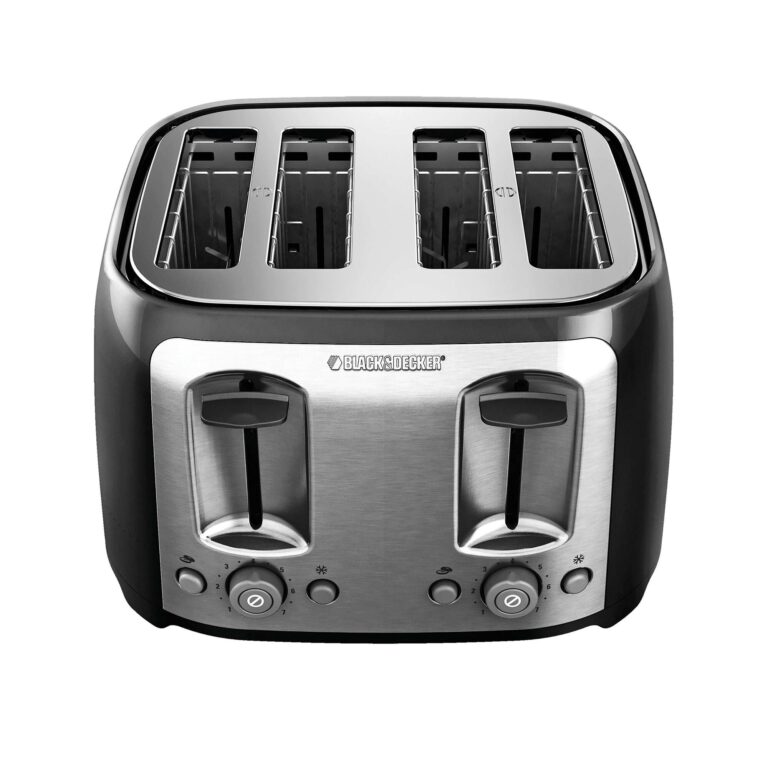
A typical toaster in the United States uses 700 to 1,500 watts while it is actively heating. Most two-slice toasters draw about 750 to 1,000 watts, while many four-slice models use 1,200 to 1,800 watts.
The exact wattage depends on the toaster’s size, heating elements, settings, and design. Check the label on the bottom or back of the toaster for the most accurate number.
Introduction
For most American households, a toaster uses less energy than a large oven but draws a high amount of power for a short time. A 1,000-watt toaster running for five minutes uses about 0.083 kilowatt-hours (kWh) of electricity.
That means the cost is usually only a few cents per use. The toaster’s watt rating tells you how much power it draws while heating; it does not tell you the total energy used during a complete breakfast.

Typical Toaster Wattage in the United States
Most household toasters fall into these wattage ranges:
| Toaster type | Common power range | Typical use |
|---|---|---|
| Small two-slice toaster | 700–900 watts | One or two slices |
| Standard two-slice toaster | 900–1,200 watts | Daily household use |
| Four-slice toaster | 1,200–1,800 watts | Four slices at once |
| Commercial or high-speed toaster | 1,500–2,500+ watts | Fast or high-volume use |
These ranges are estimates, not universal specifications. A two-slice toaster with wide slots and powerful heating elements may use more electricity than a basic four-slice model.
Examples from U.S. product specifications include:
- The Cuisinart CPT-160 two-slice toaster is rated at 900 watts.
- The Hamilton Beach 22671 two-slice toaster is commonly listed by the manufacturer at about 750 watts, depending on the model and market.
- Many four-slice toasters are rated between 1,400 and 1,800 watts.
Manufacturers may revise models, so use the rating printed on the appliance or its manual instead of relying only on a product listing.
What the watt rating means
A watt is a unit of power. It describes the rate at which the toaster uses electricity at a given moment.
For example:
- A 900-watt toaster uses electricity at a rate of 900 watts while its heating elements are on.
- A 1,500-watt toaster uses electricity at a rate of 1,500 watts while heating.
- A toaster rated at 1,200 watts does not necessarily use 1,200 watts for the entire toast cycle.
The heating elements may turn off and on as the toaster controls temperature. Some models also use separate heating zones, so actual power can change during operation.
How Much Electricity Does a Toaster Use?
A toaster’s energy use depends on three factors:
- Its wattage.
- How long it runs.
- How often it is used.
Use this formula to estimate electricity consumption:
Energy used in kilowatt-hours =
(watts × minutes used) ÷ 60,000
Example: a 1,000-watt toaster
Suppose a 1,000-watt toaster runs for five minutes:
(1,000 × 5) ÷ 60,000 = 0.083 kWh
At a hypothetical electricity rate of $0.16 per kWh:
0.083 kWh × $0.16 = about $0.013
That is about 1.3 cents per five-minute use.
Your actual rate may be higher or lower. The U.S. Energy Information Administration explains that residential electricity prices vary by state, utility, season, and customer type. Use the rate on your electric bill for a more accurate estimate.

Daily and yearly cost examples
The table below uses a hypothetical electricity rate of $0.16 per kWh. It assumes the toaster draws its full rated wattage for the entire time shown.
| Toaster rating | Use per day | Energy per day | Approximate yearly cost |
|---|---|---|---|
| 750 watts | 5 minutes | 0.063 kWh | $3.68 |
| 1,000 watts | 5 minutes | 0.083 kWh | $4.87 |
| 1,500 watts | 5 minutes | 0.125 kWh | $7.30 |
| 1,800 watts | 10 minutes | 0.300 kWh | $17.52 |
These figures are estimates. They may overstate or understate real use because heating elements can cycle on and off.
Even a powerful toaster often costs little to operate because it runs for only a few minutes at a time. The cost becomes more noticeable when the appliance is used for long periods or many times each day.
Toaster Watts Compared With Other Kitchen Appliances
A toaster generally uses more power than small electronics but less total energy than appliances that run for a long time.
| Appliance | Approximate power range |
|---|---|
| Phone charger | 5–30 watts |
| LED light bulb | 5–15 watts |
| Toaster | 700–1,800 watts |
| Coffee maker | 600–1,500 watts |
| Microwave oven | 600–1,500 watts of cooking power; higher input may apply |
| Toaster oven | 1,200–1,800 watts |
| Electric kettle | 1,000–1,500 watts |
| Full-size electric oven | 2,000–5,000 watts |
Wattage alone does not determine operating cost. A 1,500-watt appliance used for two minutes may consume less energy than a 100-watt appliance left on for several hours.
This is why a toaster can have a high watt rating but a low monthly cost. It heats quickly and usually shuts off after a short cycle.

How to Find Your Toaster’s Exact Wattage
The fastest method is to read the toaster’s rating label.
Check the appliance label
Look on:
- The bottom of the toaster.
- The back panel.
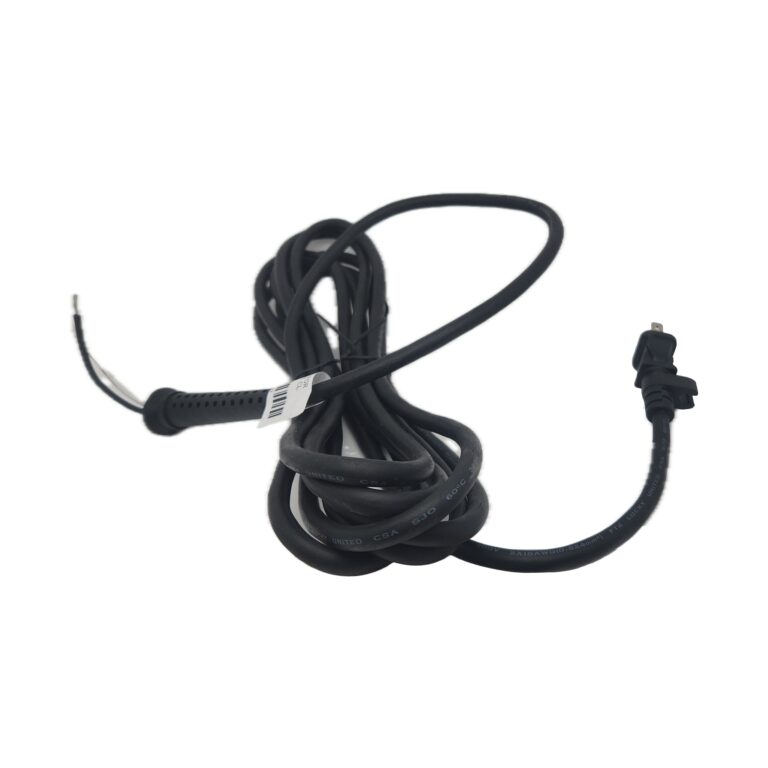
- The power cord label.
- The original box.
- The owner’s manual.
- The manufacturer’s product page.
The label may show voltage and amperage instead of watts. In that case, use this formula:
Watts = volts × amps
Most U.S. household outlets supply about 120 volts. For example:
120 volts × 8 amps = 960 watts
A label marked “120 V, 10 A” may indicate a maximum input of about 1,200 watts.
Do not assume that the number is exact during every second of operation. It may represent rated or maximum input rather than average use.
Measure actual use with a plug-in power meter
A plug-in watt meter can show the toaster’s real-time power draw and total energy use.
To measure it:
- Use a power meter rated for the toaster’s voltage and current.
- Plug the meter into the wall outlet.
- Plug the toaster into the meter.
- Watch the watt reading while the heating elements operate.
- Use the meter’s kWh function, if available, to record energy over a full cycle.
- Stop if the meter becomes hot, smells unusual, or shows an overload warning.
Use a properly rated meter designed for household loads. Do not open the toaster or place test probes inside it. Toasters contain exposed heating elements and can present a shock or burn hazard even when they appear inactive.
What Changes a Toaster’s Power Use?
Several design and use factors affect the toaster’s electricity demand.
Number of slices
A four-slice toaster may use more total power than a two-slice toaster because it has more heating elements. However, some four-slice models divide the elements into independent zones. Toasting only two slices may use less power than operating all four slots.
Toast darkness
A darker setting usually runs the toaster for a longer time. It may not greatly change the toaster’s peak wattage, but it increases total energy use because the appliance operates longer.
For example, a 1,000-watt toaster running for three minutes uses:
(1,000 × 3) ÷ 60,000 = 0.05 kWh
Running the same toaster for six minutes doubles the estimated energy use to 0.10 kWh.
Bread temperature and moisture
Frozen, thick, or moist bread may require a longer cycle. Some toaster models have a dedicated frozen setting that adds time before normal heating begins.
Heating element condition
A damaged or aging toaster may toast unevenly or take longer to finish. Longer operation can increase energy use, but poor performance is more often a reason to stop using the appliance and inspect it for damage.
Do not continue using a toaster with a frayed cord, cracked housing, loose plug, sparks, smoke, or a burning odor.
Can a Toaster Overload a U.S. Household Circuit?
A toaster can contribute to an overloaded circuit because it draws substantial power while heating. The risk depends on what else shares the circuit.
A 1,500-watt toaster at 120 volts draws about:
1,500 ÷ 120 = 12.5 amps
If another high-power appliance is running on the same circuit, such as a microwave, coffee maker, or air fryer, the combined load may trip the circuit breaker or heat wiring and connections.
For safety:
- Plug the toaster directly into a properly installed wall outlet.
- Avoid using a cheap or lightly rated extension cord.
- Do not run several high-wattage kitchen appliances from one power strip.
- Keep the cord away from hot surfaces and water.
- Unplug the toaster before cleaning or clearing a stuck item.
- Never insert a knife, fork, or other metal object into the toaster.
The U.S. Consumer Product Safety Commission recommends following the manufacturer’s instructions and replacing appliances with damaged cords or plugs. If a circuit breaker trips repeatedly, stop using the appliances on that circuit and ask a qualified electrician to check the installation.
Toaster vs. Toaster Oven: Which Uses More Electricity?
A toaster oven often uses more energy for simple toast because it has a larger chamber and usually takes longer to heat. Many toaster ovens are rated around 1,200 to 1,800 watts, similar to or higher than a standard toaster.
For two slices of bread, a regular toaster is usually faster and may use less energy because it heats only the slots and nearby elements. A toaster oven can be more useful when you need to heat:
- Several slices at once.
- Thick bread or bagels.
- Pizza.
- Small meals.
- Food that does not fit in a standard toaster.
The better choice depends on the task. Use the appliance that completes the job in the shortest safe time, not simply the appliance with the lowest watt rating.
Common Mistakes When Estimating Toaster Electricity Use
Confusing watts with watt-hours
Watts measure power. Watt-hours measure energy used over time.
A toaster may draw 1,000 watts but consume only about 0.083 kWh during a five-minute cycle. The watt number alone cannot tell you the cost.
Assuming a higher watt rating always costs more
A 1,500-watt toaster may finish in less time than a 900-watt model. Its peak demand is higher, but its total energy use may be similar for the same result.
Compare both wattage and operating time.
Treating the rated wattage as constant
The printed rating is useful for sizing and comparison, but the toaster may cycle its elements. A plug-in meter gives a better estimate of actual energy use.
Leaving the toaster unattended
A toaster should not be used as a set-and-forget appliance. Crumbs can collect near heating elements, and trapped food can create a fire risk. Clean the crumb tray according to the manufacturer’s instructions, and never use water inside the appliance.
Frequently Asked Questions
How many watts does a two-slice toaster use?
Most two-slice toasters use about 700 to 1,200 watts. Many common models fall near 750, 900, or 1,000 watts. Check the rating label for the exact figure.
How many watts does a four-slice toaster use?
Most four-slice toasters use about 1,200 to 1,800 watts. Some high-speed or commercial units may use more.
Does a toaster use electricity when it is plugged in but not running?
A basic toaster usually uses little or no meaningful power when it is plugged in and inactive. Models with electronic displays, timers, or other standby features may draw a small amount. Unplug the toaster when it is not needed if you want to eliminate standby use and reduce risk.
Is a toaster cheaper to run than a toaster oven?
Usually, a standard toaster uses less energy for a small amount of toast because it heats a smaller area and finishes sooner. The result depends on each appliance’s wattage, cycle time, and the amount of food being heated.
Can I run a toaster from a power strip?
Avoid using a low-rated power strip with a toaster. A toaster draws high current while heating. Plug it directly into a properly installed wall outlet unless the manufacturer specifically permits another setup using equipment with the correct rating.
Conclusion
A typical U.S. toaster uses 700 to 1,500 watts, with two-slice models often near 750–1,000 watts and four-slice models commonly near 1,200–1,800 watts.
To estimate operating cost, multiply the toaster’s wattage by the number of minutes it runs, divide by 60,000 to get kWh, and multiply by your electricity rate. For most households, a normal five-minute toast cycle costs only a few cents.
For the exact answer, read the toaster’s label. For the most accurate real-world measurement, use a properly rated plug-in power meter and never open or probe the toaster itself.