How Much Energy Does It Take To Toast Bread: Facts
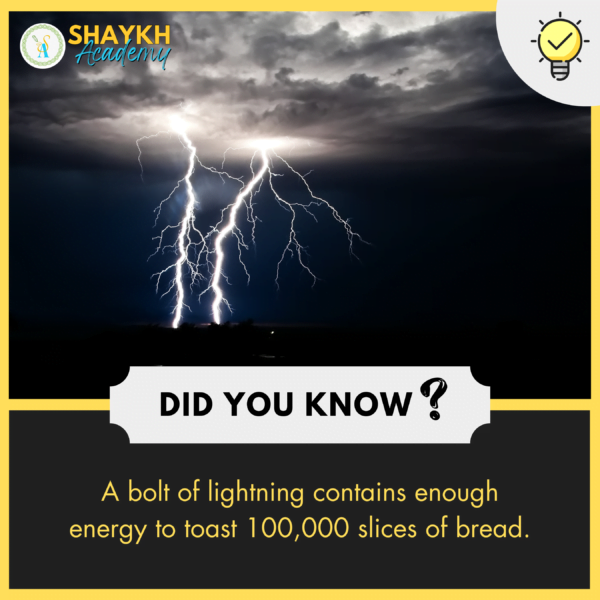
For most homes in the United States, toasting two slices of bread in a standard pop-up toaster uses about 0.04 to 0.08 kilowatt-hours (kWh) of electricity. At an example electricity rate of 16 cents per kWh, that costs roughly 0.6 to 1.3 cents per use.
The exact amount depends on the toaster’s power rating and how long it runs. A typical 900- to 1,500-watt toaster used for three minutes consumes about 45 to 75 watt-hours, or 0.045 to 0.075 kWh.
Quick answer: toaster energy use in the United States
A toaster does not use its full daily energy rating every time it is plugged in. Its energy use depends on three things:
- Power rating: Usually listed in watts on the label or manual.
- Toast time: Often about two to four minutes.
- Number of cycles: More batches mean more total energy.
Use this formula:
Energy used in kWh = watts × minutes ÷ 60,000
For example, a 1,200-watt toaster running for three minutes uses:
1,200 × 3 ÷ 60,000 = 0.06 kWh
At 16 cents per kWh:
0.06 × $0.16 = $0.0096
That is just under 1 cent.
Typical toaster energy use
| Appliance or setting | Typical power | Typical use time | Estimated energy |
|---|---|---|---|
| Two-slice toaster | 900–1,200 watts | 2–4 minutes | 0.03–0.08 kWh |
| Four-slice toaster | 1,200–1,800 watts | 2–4 minutes | 0.04–0.12 kWh |
| Toaster oven, one short cycle | 1,200–1,800 watts | 5–15 minutes | 0.10–0.45 kWh |
| Large electric oven | 2,000–5,000 watts | 10–30 minutes | 0.33–2.50 kWh |
These are estimates, not universal measurements. Heating elements cycle on and off in some appliances, and the actual time depends on the toast shade, bread type, appliance design, and whether the appliance needs to preheat.
How to calculate the energy used by your toaster
The most accurate household estimate comes from the wattage printed on your toaster and its actual operating time.
Step 1: Find the toaster’s wattage
Look for a label on the bottom, back, or power cord area. The label may show:
- Watts, written as W
- Voltage and amperage
- A model number linked to the user manual
If the label lists volts and amps but not watts, use:
Watts = volts × amps
For example, a toaster rated at 120 volts and 10 amps has a maximum input of about 1,200 watts. Many U.S. household appliances use 120-volt power, but the exact rating should come from the appliance label.
Step 2: Measure or estimate the cycle time
Start timing when the heating elements turn on and stop when the cycle ends. A toaster set to a light shade may run for less time than one set to a dark shade.
Do not count the time the toaster is merely plugged in unless it has an active electronic display or other standby feature. A basic mechanical toaster generally draws little or no meaningful power while idle.
Step 3: Apply the formula
Use this version when your toaster’s rating is in watts:
kWh = watts × minutes ÷ 60,000
Example calculation
Assume:
- Toaster rating: 1,100 watts
- Toasting time: 3 minutes
1,100 × 3 ÷ 60,000 = 0.055 kWh
The toaster uses about 55 watt-hours for that cycle.
If the electricity rate is 16 cents per kWh:
0.055 × $0.16 = $0.0088
The cycle costs about 0.9 cents.
What affects how much energy toasting bread uses?
The toaster’s power rating matters, but it is only part of the answer. A high-wattage toaster may use more power per minute but finish faster. A lower-wattage toaster may run longer. The total energy can be similar.
Toast shade and cycle length
Darker toast usually requires more heating time. If the toaster runs twice as long, it will generally use about twice as much energy, assuming the heating elements draw a similar amount of power.
The relationship is simple:
- Light toast: less time and less energy
- Medium toast: moderate time and energy
- Dark toast: more time and energy
The settings are not standardized across brands. A “3” on one toaster may not match a “3” on another.
Bread thickness and moisture
Thick, dense, or moist bread may need more time than a thin slice of white bread. Frozen bread may also require a longer cycle or a dedicated frozen setting.
The extra energy is usually still small. Even an additional one or two minutes may add only a few hundredths of a kWh.
Toaster size
A four-slice toaster often has a higher wattage than a two-slice model. However, the energy per slice is not always twice as high. If all four slots run at once, the toaster may distribute power across its heating elements.
For a fair comparison, compare:
- Energy used per cycle
- Number of slices toasted
- Toast time
- Whether all heating elements operate at the same power
Appliance efficiency
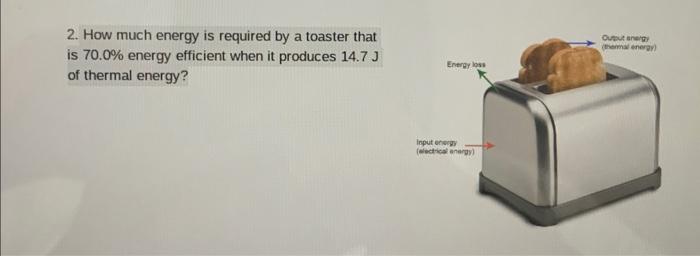
A toaster converts much of its electrical input into heat. That does not mean all the heat reaches the bread. Some energy warms the metal frame, air, and surrounding area.
Still, a pop-up toaster is often efficient for a small task because it heats a narrow space and does not need to warm a full oven cavity.
Toaster vs. toaster oven vs. conventional oven
For one or two slices, a pop-up toaster usually uses less electricity than a toaster oven or full-size electric oven. The main reason is that larger appliances heat more air and more material around the food.
Pop-up toaster
A standard toaster is usually the lowest-energy option for ordinary sliced bread. It has:
- A short heating cycle
- Little or no preheat time
- A small heating area
- Automatic shutoff on many models
A typical cycle may use 0.03 to 0.08 kWh.
Toaster oven
A toaster oven can toast bread, but it often needs more time. Some models require preheating, and the oven cavity absorbs heat before the bread begins to brown.
A short toaster-oven cycle may use around 0.10 to 0.45 kWh, depending on its wattage, preheat time, and cooking mode.
A toaster oven may still be the practical choice when you are heating several items, using a pan, or toasting food that does not fit in a slot toaster.
Full-size electric oven
A conventional electric oven is usually excessive for a single slice of toast. It has a larger cavity and may cycle a high-power heating element for a longer period.
Use an oven when the oven is already operating for another meal. Starting a large oven only to toast bread can use much more electricity than using a toaster.
Gas oven
A gas oven does not use electricity for its main heat source, although it may use a small amount of electricity for controls, ignition, lights, or fans. Comparing total energy between gas and electric appliances requires a different method because gas is measured in therms or British thermal units, not only kWh.
For household electricity costs, however, the electric toaster calculation remains straightforward.
How much does toasting bread cost per day or year?
The cost is small for occasional use, but you can estimate it over time.
Assume:
- Toaster power: 1,200 watts
- Cycle time: 3 minutes
- Energy per cycle: 0.06 kWh
- Electricity price: 16 cents per kWh
One use
0.06 kWh × $0.16 = $0.0096
That is about 1 cent.
One cycle every day
$0.0096 × 365 = $3.50 per year
Two cycles every day
$0.0096 × 2 × 365 = $7.01 per year
These figures assume the toaster runs for exactly three minutes and the electricity price stays at 16 cents per kWh. Your local rate may be higher or lower. The U.S. Energy Information Administration reports average residential electricity prices, but rates vary by state, utility, season, and billing plan.
A simple cost formula
Cost = kWh used × your electricity price per kWh
Find your price on your electric bill. Some bills show a single average rate, while others separate supply charges, delivery charges, taxes, and fees.
Does leaving a toaster plugged in use electricity?
A basic mechanical toaster usually uses little energy when it is not running. However, some modern models may include electronic controls, displays, sensors, or other standby features.
The easiest way to know is to check the manual or measure the appliance with a plug-in electricity meter. Standby use is often much smaller than active heating, but unplugging the toaster can reduce standby consumption and remove one electrical connection when the appliance is not in use.
Do not unplug a toaster by pulling the cord. Turn it off, let it cool, and remove the plug by gripping the plug body.
Is a toaster more energy efficient than a microwave?
A microwave is not a direct substitute for a toaster because it heats food differently. A microwave can warm bread, but it does not create the dry surface and crisp texture associated with toast.
For bread that only needs warming, a microwave may use little energy during a short cycle. For crisp toast, a toaster is usually the more suitable appliance.
Energy comparisons should match the task:
- Crisp toast: Use a pop-up toaster.
- Warm, soft bread: A microwave may be enough.
- Toast plus other baked food: A toaster oven may be more useful.
- Several dishes at once: A conventional oven may make sense if it is already hot.
The lowest-energy appliance is not useful if it cannot produce the result you want.

Common mistakes when estimating toaster energy use
Confusing watts with watt-hours
Watts measure the rate of energy use. Watt-hours measure the amount used over time.
A 1,200-watt toaster does not use 1,200 watt-hours for every cycle. If it runs for three minutes, it uses only about 60 watt-hours.
Assuming the toaster runs continuously
Some toasters cycle their heating elements. The appliance may switch elements on and off during the process. The rating on the label is still useful for an estimate, but a plug-in meter can provide a closer reading.
Ignoring preheating
A toaster oven may begin using energy before the bread enters the oven. Include preheat time when comparing it with a pop-up toaster.
Comparing appliances by wattage alone
Wattage does not tell you the total energy used unless you also know the operating time. The correct comparison is:
Power × time
Using the wrong electricity rate
The national average is only a reference point. Use the effective rate on your bill for a personal cost estimate.
Toaster safety and energy-saving habits
Toast energy use is low, but toaster safety still matters. The U.S. Consumer Product Safety Commission advises keeping toasters away from water and combustible materials and cleaning crumbs as directed by the manufacturer.
Follow these basic habits:
- Keep the toaster on a stable, heat-resistant surface.
- Do not use metal utensils to remove stuck bread while it is plugged in.
- Unplug the toaster before cleaning it.
- Keep curtains, paper towels, and other flammable items away from the appliance.
- Do not operate a damaged toaster or frayed power cord.
- Follow the manufacturer’s instructions for frozen food and cleaning.
- Stay nearby while the toaster is operating.
Do not try to reduce energy use by forcing a toaster to run longer than needed or disabling its automatic shutoff. A few cents saved is not worth creating a fire or shock risk.
The most practical way to reduce toast energy use
For one or two slices, use a pop-up toaster rather than preheating a full-size oven. Choose the lightest setting that gives the texture you want, and avoid repeated cycles caused by changing the setting after the toast starts.
If you use a toaster oven, skip preheating when the manufacturer allows it and place the food in an already warm appliance when practical. Do not overcrowd the appliance or block air vents, because poor airflow can increase cooking time and create a safety problem.
The energy difference between light and dark toast is usually small. The largest avoidable waste comes from heating a large oven for a very small job.
Frequently asked questions
How many watts does a toaster use?
Most household pop-up toasters use about 900 to 1,500 watts while heating. Check the label or manual for the exact rating. Four-slice models may have a higher rating than two-slice models.
How many kWh does a toaster use in 10 minutes?
A 1,200-watt toaster running for 10 minutes would use:
1,200 × 10 ÷ 60,000 = 0.20 kWh
A toaster normally does not run for 10 minutes in one cycle. This example shows why time has a major effect on energy use.
Is toasting bread expensive?
No. A typical three-minute toaster cycle costs about one cent at an electricity rate of 16 cents per kWh. Your cost depends on the toaster’s wattage, run time, and local electricity price.
Does frozen bread use more electricity?
Usually, yes. Frozen bread may need extra time or a frozen setting. The added energy is generally small, but the exact amount depends on the toaster and the bread.
How can I measure my toaster’s exact energy use?
Use a plug-in electricity meter rated for household appliances. Plug the meter into the wall, plug the toaster into the meter, and record the kWh used during a full cycle. Follow the meter instructions, and do not use damaged equipment.
Research basis and limits
The calculations in this guide use the standard electrical relationship between power and time. Appliance wattage ranges are general estimates; the label and manual for a specific toaster are the best sources for its rated input.
Electricity price examples use 16 cents per kWh as a simple U.S. reference value, not a guaranteed household rate. For current regional averages, consult the U.S. Energy Information Administration’s electricity data. For product-specific behavior, use the appliance manufacturer’s documentation. For safety guidance, consult the U.S. Consumer Product Safety Commission.

Conclusion
Toasting bread in a typical U.S. pop-up toaster uses about 0.04 to 0.08 kWh per cycle, or roughly one cent of electricity at a 16-cent-per-kWh rate. Your exact result depends on the toaster’s wattage and how long it runs.
To calculate your own use, multiply the toaster’s watts by the cycle time in minutes and divide by 60,000. For the lowest practical energy use, toast small amounts in a pop-up toaster instead of heating a toaster oven or full-size electric oven.