How Hot Does A Toaster Heating Element Get: Heat Guide
A toaster heating element usually reaches about 500–700°C (900–1,300°F) while it is glowing. Some designs may run cooler or hotter, depending on the wire, power level, airflow, bread position, and control cycle.
That temperature applies to the heating wire itself, not the entire toaster. The outside case, bread slot, crumb tray, and nearby air are usually much cooler, but they can still cause burns or ignite loose food and paper.
In the United States, most household toasters operate from a 120-volt outlet. They use electrical resistance to turn that electricity into heat.

What temperature does a toaster heating element reach?
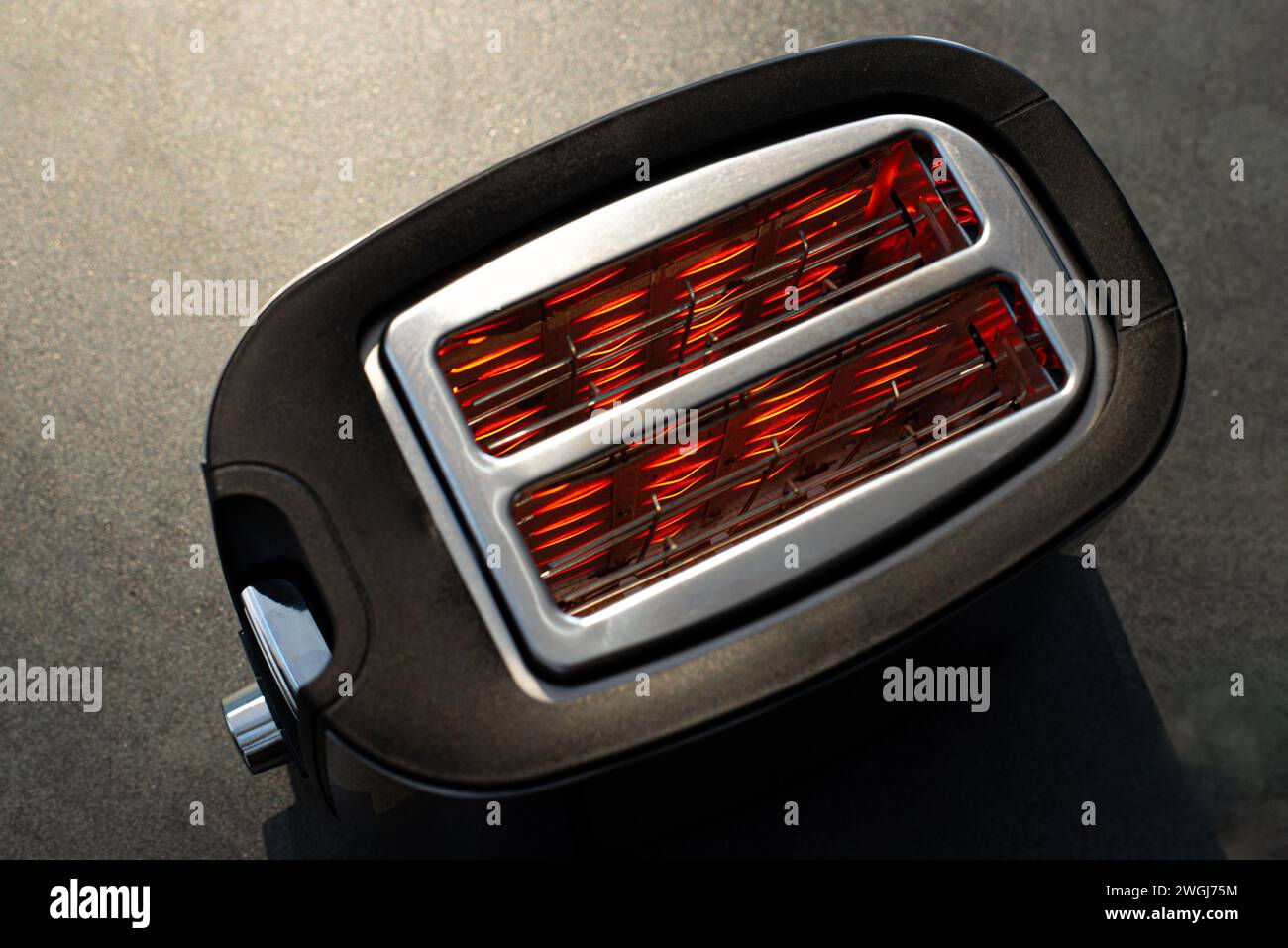
A toaster element commonly runs in the range of 500–700°C (900–1,300°F). You can often see this heat because the wire glows dull red, bright red, or orange.
The exact temperature is not fixed. A toaster turns the elements on and off during a cycle. The wire may reach its peak temperature for a short time, then cool slightly when the control cuts power.
| Toaster part | Typical heat condition | Practical meaning |
|---|---|---|
| Heating wire | About 500–700°C (900–1,300°F), often estimated | Hot enough to glow and ignite some materials |
| Air near the slots | Much lower than the wire | Can still be hot enough to burn skin |
| Bread surface | Often browns around 150–200°C (300–390°F) | Browning comes from chemical reactions, not melting |
| Outer case | Varies by design and use | May become uncomfortable or unsafe to touch |
| Crumb tray | Can become very hot | Old crumbs may smoke or catch fire |
These are useful ranges, not a universal rating. Toaster brands do not all use the same wire length, wire thickness, electrical power, insulation, or control method.
Why does the wire glow?
The heating element is usually made from a high-resistance alloy such as nichrome. When electricity passes through the wire, the wire resists the flow of current and releases heat.
The relationship is often described by:
[
P = I^2R
]
Here, P is heat power in watts, I is current in amps, and R is electrical resistance in ohms.
As the wire becomes hot, it emits visible light. A dark red glow indicates a lower temperature than a bright orange glow, but color alone cannot provide a precise reading.
How does a toaster make heat?
A toaster uses thin resistance wire stretched across insulating supports. The wire is placed close to the bread so that heat reaches the bread through radiation and warm air.
The main heat-transfer methods are:
- Radiation: The glowing wire sends infrared energy toward the bread.
- Convection: Hot air moves around the bread.
- Conduction: Heat moves through the bread itself after the surface becomes hot.
Radiation does much of the early browning work. This is why the bread can brown even though it does not touch the heating element.
Why is nichrome used?
Nichrome is useful because it:
- Has relatively high electrical resistance.
- Can withstand repeated heating and cooling.
- Resists oxidation better than many ordinary metals.
- Can be made into a thin wire with a large heating surface.
The wire must be hot enough to transfer heat but not so hot that it fails during normal use. Manufacturers balance wire size, resistance, electrical power, and airflow.
Does a toaster element stay at one temperature?
No. A toaster element normally cycles between powered and unpowered states.
A mechanical or electronic control may:
- Energize the heating elements.
- Heat and brown the bread.
- Reduce or stop power for part of the cycle.
- Release the bread when the timer ends.
Some models use different power patterns for light, medium, and dark toast. A darker setting may extend the heating time rather than greatly increasing the element’s maximum temperature.

Why does the toaster wire get hotter than the bread?
The element must be much hotter than the bread to transfer enough heat in a short time. A wire at several hundred degrees Celsius can radiate strong infrared energy toward bread at a much lower temperature.
Bread browns through the Maillard reaction and related drying and caramelization processes. These reactions change the color, smell, and taste of the bread as its surface dries and heats.
The bread does not need to reach the wire’s temperature. In fact, direct contact with a glowing wire could char the surface quickly and damage the appliance.
Why does one side sometimes toast more?
Uneven toast may result from:
- A damaged or weak heating section.
- Bread that sits off-center.
- A toaster slot that is wider than the bread.
- Crumbs blocking part of the radiant path.
- Different element spacing on each side.
- A control circuit that is aging or malfunctioning.
A small difference is common. A large dark band, sparking, smoke, or one side that never glows can indicate a fault.
What affects toaster heating element temperature?
The heating element temperature depends on the toaster’s electrical and physical design. The most important variables are below.
Electrical power
A higher-power toaster can deliver more heat. Many household models are rated somewhere around 700 to 1,500 watts, although the exact rating varies by product.
A toaster’s wattage is not the same as its element temperature. A higher wattage may heat bread faster, but the manufacturer can also use:
- Longer resistance wire.
- Thicker wire.
- More heating sections.
- Different control cycles.
- More airflow around the element.
Wire size and resistance
A thinner wire has less metal mass and may heat quickly. Wire length and resistance determine how much current flows from a 120-volt supply.
The element must be designed for the toaster’s circuit. Replacing it with ordinary wire is dangerous because ordinary wire may draw excessive current, overheat, or cause a fire.
Airflow and enclosure design
Air movement cools the element. A toaster with open slots, ventilation, or a different internal layout may run at a different wire temperature from another toaster with the same wattage.
Bread also changes airflow. A thick slice can block heat and reduce ventilation near part of the element.
Toast setting and cycle time
A dark setting often keeps the elements active longer. It does not necessarily make the wire dramatically hotter.
Longer heating also raises the temperature of the bread, crumb tray, metal frame, and surrounding air. This is why a second batch of toast may cook faster or brown more than expected.
Condition of the toaster
Crumbs, dust, damaged supports, and loose wires can change heat flow. A toaster that smells strongly of burning plastic, produces sparks, or glows in an unusual place should be unplugged and removed from service.

Can you measure a toaster heating element temperature?
You can estimate the temperature, but accurate measurement is difficult and unsafe for an untrained person.
An infrared thermometer may give a misleading reading because:
- The wire is thin compared with the thermometer’s measurement area.
- The wire’s emissivity may not match the meter setting.
- The wire is partly hidden by the toaster frame.
- Reflections from shiny metal can affect the reading.
- The temperature changes during the heating cycle.
A thermocouple can measure high temperatures more directly, but placing one inside a toaster can expose you to live electrical parts and heat. It may also change airflow or touch a powered component.
For normal household use, do not open or modify a toaster to measure the element. Toasters can retain hazards even after they are unplugged, and their internal parts are not designed for casual access.
Is the glow color a reliable thermometer?
No. Glow color provides only a rough visual clue.
A faint red glow suggests the wire is hot, but the color changes with room lighting, wire condition, viewing angle, and the metal’s surface. Two parts of the same element may appear different even when their temperatures are close.
Use the glow to recognize a hot element—not to decide whether it is safe to touch.
Can a toaster heating element start a fire?
Yes. A toaster element can ignite combustible material under the right conditions.
The most common risks include:
- Bread, crumbs, or pastries catching fire.
- Paper or plastic falling into the slot.
- Grease or food residue accumulating inside.
- A stuck control leaving the element powered.
- A damaged wire touching metal or another part.
- A toaster being placed below cabinets or near curtains.
The heating wire is already hotter than the ignition temperature of many everyday materials. That does not mean every crumb will ignite, because ignition also depends on exposure time, moisture, oxygen, and contact with the hot surface.
What should you do if a toaster catches fire?
If a toaster is smoking or burning:
- Unplug it if you can do so without reaching through flames or touching hot metal.
- Keep the toaster in place. Moving it can spread flames or drop burning crumbs.
- Do not pour water into the toaster. Water and electrical equipment can create a shock hazard, and water may spread hot grease.
- If safe, use a suitable fire extinguisher for the type of fire.
- Leave the area and call 911 if the fire does not stop quickly or spreads.
Do not insert a knife, fork, or other metal tool into a plugged-in toaster. Unplugging the toaster does not make a burning appliance safe to handle immediately.

Is the outside of a toaster as hot as the element?
Usually, no. The element is much hotter than the outside case because it is designed to glow and transfer heat directly.
However, the outer surface can still become hot enough to burn skin, especially around:
- The top metal surface.
- The slot edges.
- The control lever.
- The crumb tray.
- Areas near ventilation openings.
Plastic-bodied toasters may feel cooler than metal-bodied models, but a cooler surface does not prove that the inside is safe to touch or inspect.
Place the toaster on a stable, heat-resistant surface with clear space around it. Follow the clearance instructions in the owner’s manual, especially if the toaster is under kitchen cabinets.
Can you replace or repair a toaster heating element?
Most consumers should not replace a toaster heating element themselves. The element is part of a system that includes insulation, supports, wiring, controls, and a metal frame.
A repair can fail if:
- The replacement wire has the wrong resistance.
- The wire touches the case.
- The support is cracked.
- Insulation is missing.
- A control remains stuck on.
- The repair changes the designed airflow.
Because toasters are inexpensive electrical appliances, replacement is often safer than internal repair. If a toaster shows sparking, exposed wire, a burning smell, repeated tripped breakers, or unusual heating, unplug it and stop using it.
Common mistakes about toaster temperatures
“The toaster is safe because the wire is not touching the bread.”
The wire can transfer intense radiant heat without touching the bread. Keep hands, utensils, paper, and plastic away from the slots.
“A lower toast setting makes the element safe to touch.”
A lower setting usually changes timing or power control. The element may still become hot enough to cause a severe burn.
“Water will put out any toaster fire.”
Water should not be poured into a plugged-in or burning toaster. Electrical shock and steam hazards make this unsafe.
“A clean toaster cannot catch fire.”
Cleaning reduces crumb buildup but does not remove every risk. A failed control, damaged wire, or nearby combustible object can still create a fire hazard.
“A dark glow means the element is broken.”
A red or orange glow is normal for many toaster elements. A glow in an unusual location, sparking, a popping sound, or a wire touching the frame is not normal.

Frequently asked questions
How hot does a toaster get in Fahrenheit?
The heating wire commonly reaches about 900–1,300°F (500–700°C) while glowing. The outside of the toaster and the bread are normally cooler.
Can a toaster element melt metal?
The element can become hot enough to soften or damage some low-melting materials, but it will not melt every metal. Common metals such as steel and aluminum have melting points that vary widely, and the element’s heat transfer is limited by contact, time, and design.
How hot does bread get in a toaster?
The bread surface can reach roughly 300–390°F (150–200°C) during browning, though the exact temperature varies with moisture, bread thickness, toaster power, and cycle time.
Why does my toaster smell hot?
A mild smell can occur when new manufacturing residue burns off or old crumbs heat up. A strong plastic, electrical, or burning-wire smell is a warning sign. Unplug the toaster, let it cool, and do not use it again until the cause is clear.
Should toaster heating elements glow evenly?
They should generally heat in a consistent pattern, but small differences can occur. A dark section, bright hot spot, spark, broken wire, or element touching the frame suggests damage and warrants replacement.
Key takeaways
- A toaster heating element commonly reaches about 500–700°C (900–1,300°F).
- The wire is much hotter than the bread or outer case.
- Toasters use resistance wire, often nichrome, to convert electricity into heat.
- Toast settings usually change heating time or power cycling.
- Never touch the slots or insert metal objects, even when the toaster appears off.
- Unplug and replace a toaster that sparks, smokes, smells strongly of burning plastic, or has damaged elements.
Conclusion
A toaster heating element gets hot enough to glow red or orange—typically around 900–1,300°F. That heat lets the toaster brown bread in a few minutes, but it also creates burn and fire risks.
The safest approach is simple: keep the toaster dry, clear of loose materials, and unplug it before cleaning. Do not open or modify it unless a qualified technician can verify the repair and its electrical safety.