How Much Does A Smart Toaster Cost: 2026 Price Guide
A smart toaster in the United States usually costs $100 to $500. Most buyers will pay about $150 to $300 for a premium toaster with digital controls, sensors, countdown displays, or automatic lowering and lifting.
The price depends on what “smart” means:
- A digital toaster with sensors may cost $50 to $150.
- A premium four-slice toaster may cost $150 to $250.
- A connected toaster with advanced screen controls may cost $300 to $500 or more.
- A smart toaster oven may cost $150 to more than $1,000.
The key point is simple: many products called “smart toasters” are not connected to Wi-Fi. They use sensors and software inside the toaster, while true app-connected models are less common and usually cost more.

Smart toaster prices at a glance
The table below shows common U.S. price bands. These are typical retail ranges, not guaranteed prices. Sales, model updates, color, size, and retailer stock can change the final cost.
| Smart toaster type | Typical U.S. price | What you usually get |
|---|---|---|
| Digital two-slice toaster | $50–$120 | Display, browning control, countdown timer |
| Sensor-based two-slice toaster | $80–$180 | Automatic adjustment, lift function, consistent heating |
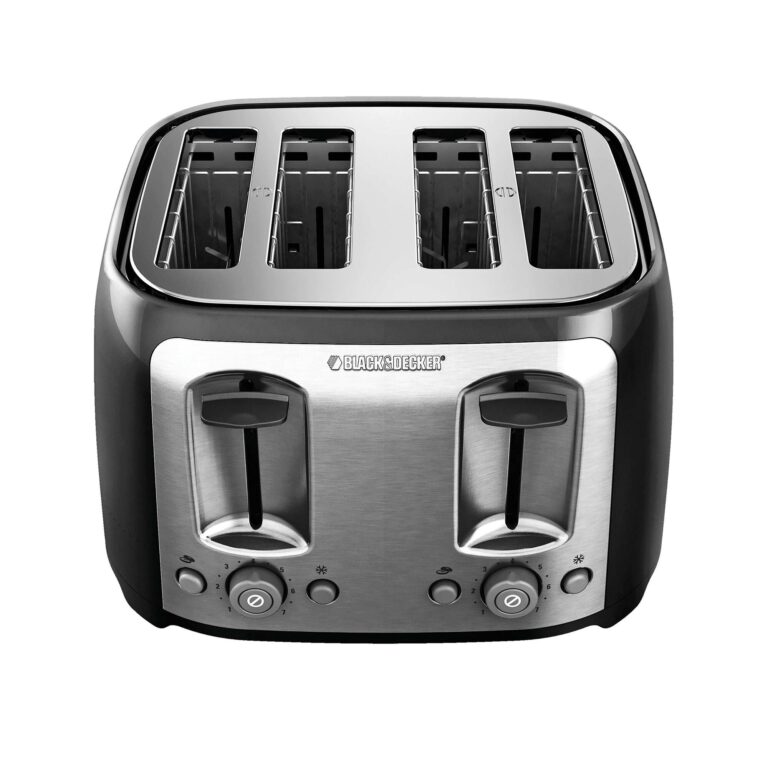
| Premium four-slice toaster | $120–$250 | Separate controls, wider slots, better sensors |
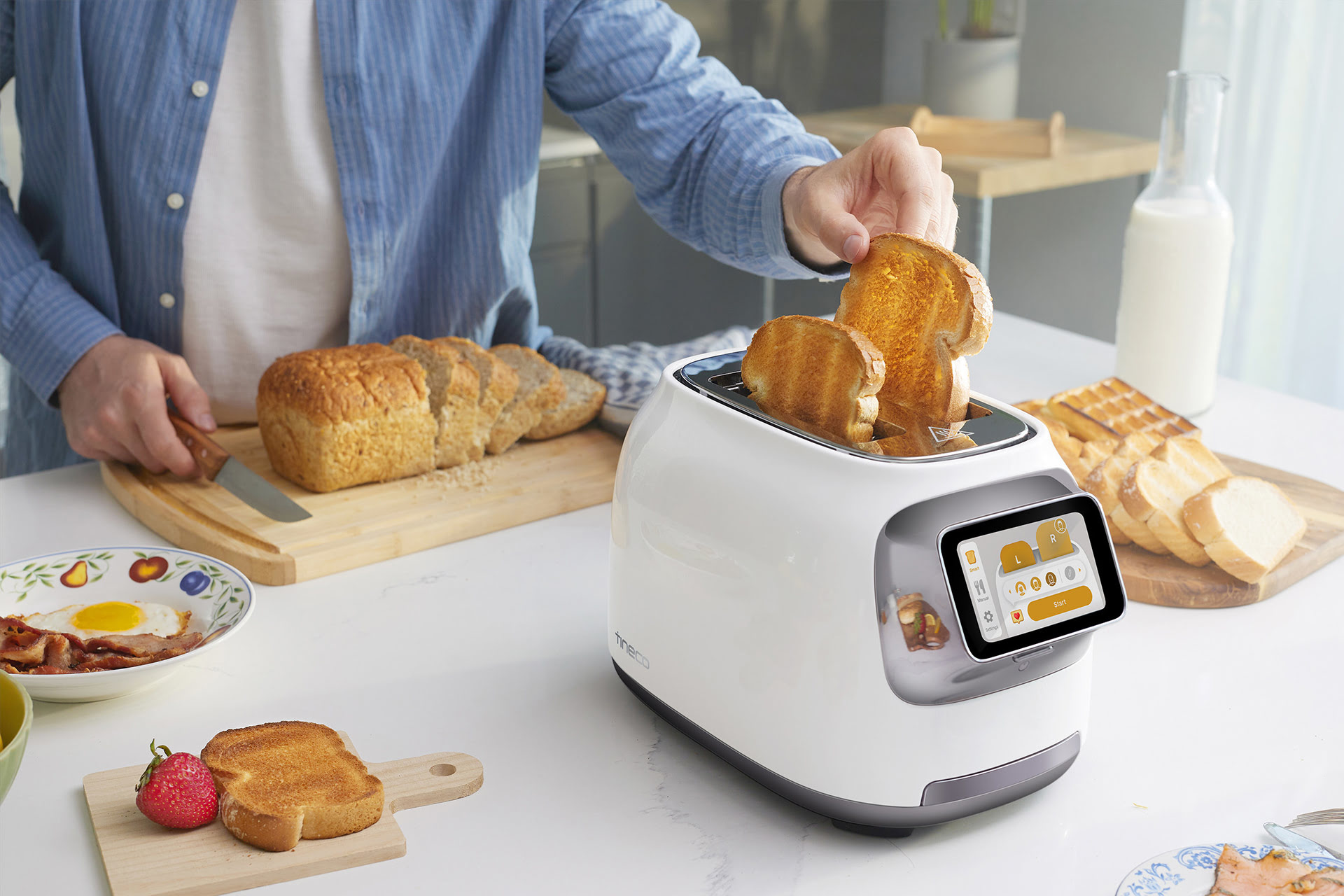
| Connected or screen-based toaster | $250–$500+ | Guided controls, automatic settings, advanced sensors |
| Smart toaster oven | $150–$1,000+ | Toasting, baking, air frying, roasting, app or voice features |
| Commercial or specialty toaster | $300–$1,500+ | High output, heavy use, larger capacity |
A standard toaster with electronic controls is often the best value for most homes. A connected toaster may cost several times more without making toast several times better.
Example prices from well-known U.S. product categories
Brand prices change, but these examples show how the market is divided:
- Premium sensor toasters: often about $100 to $250.
- Balmuda-style steam toasters: commonly around $300, depending on the model and seller.
- Revolution-style screen toasters: commonly around $400 to $600.
- Smart toaster ovens from brands such as Breville, Ninja, and June-style product lines: often $250 to $1,000 or more.
Check the manufacturer’s U.S. website and major retailers before buying. Product names, features, and prices can change between model generations.
What makes a toaster “smart”?
A smart toaster may use sensors, software, a digital display, or an internet connection. The label is not used in one consistent way across the industry.
Sensor-based smart toasters
These toasters use internal sensors to monitor heat, time, moisture, or the position of the bread. The toaster may adjust the heating cycle or lower the bread automatically.
This type is the most common form of practical smart technology in a countertop toaster. It can help reduce burnt edges and uneven browning, but results still depend on bread type, slice thickness, moisture, and the toaster’s design.
Digital toasters
a digital toaster may have:
- A countdown display
- Electronic browning levels
- Automatic lift and lower controls
- Separate settings for frozen bread
- Reheat and bagel modes
- Memory or preset functions
Digital controls do not necessarily mean the toaster connects to the internet. A display alone does not make a toaster a smart-home device.
App-connected toasters
A genuinely connected toaster may use Bluetooth or Wi-Fi. Depending on the model, the app may provide settings, alerts, recipes, or software updates.
These products are less common than smart toaster ovens. A connected toaster also needs a reliable app, compatible phone, supported operating system, and a stable product ecosystem. If the app stops working, the basic heating function may still work, but some features could be lost.
Smart toaster ovens
A smart toaster oven is a different product category. It can toast bread, but it may also bake, roast, broil, air fry, dehydrate, or reheat food.
Smart toaster ovens usually cost more because they include:
- Larger heating chambers
- Multiple heating elements
- Temperature sensors
- Convection fans
- Cooking presets
- Digital displays
- In some cases, app or voice control
If you mainly make toast, a smart toaster oven may be more appliance than you need.

What affects the price of a smart toaster?
The biggest price differences come from capacity, controls, sensors, materials, and cooking functions.
Number of slots
A two-slice toaster usually costs less than a four-slice model. A four-slice toaster may also have two independent control zones, so you can toast different bread types at the same time.
A four-slice model makes sense for a family or a busy kitchen. A two-slice model may use less counter space and cost less to replace.
Slot width and length
Wide slots cost more when they are designed for thick bread, bagels, Texas toast, or artisan slices. Long slots can hold unusually shaped bread.
Before paying more, check the slot dimensions. A toaster advertised as “wide slot” may still be too narrow for the bread you use most.
Heating control
Lower-cost models often use a simple timer and fixed heating pattern. Higher-priced models may adjust the cycle based on temperature or moisture.
Better control can improve consistency, but it does not guarantee perfect toast. Bread thickness and starting temperature still matter.
Materials and construction
Stainless steel bodies often cost more than plastic bodies. The price may also reflect stronger levers, better crumb trays, insulated sides, or longer warranties.
A metal exterior does not prove that the internal parts are better. Look for clear warranty terms and easy access to the crumb tray.
Special modes
Common paid features include:
- Bagel mode
- Frozen mode
- Reheat mode
- “A bit more” or extra-time control
- Automatic centering
- Lift-and-look function
- Automatic lowering
- Toast progress display
- Bread-type presets
Some features are useful every day. Others add cost without changing how you use the toaster.
Brand and warranty
A recognized brand may charge more for design, support, warranty coverage, and replacement parts. Compare the warranty period and exclusions.
A warranty may not cover damage from misuse, crumbs, liquid spills, voltage problems, or commercial use. Read the U.S. warranty before assuming that a higher price means better long-term protection.
Is an expensive smart toaster worth it?
An expensive smart toaster can be worth the cost if you toast often and value repeatable results. It is less attractive if you only make toast a few times per week.
Consider a premium toaster if you:
- Toast several times each day
- Use different bread sizes
- Need four slices at once
- Care about precise browning
- Prefer automatic lowering and lifting
- Want a display or guided controls
- Have enough counter space
- Can accept a higher replacement cost
A basic toaster is usually the better choice if you:
- Make only one or two slices at a time
- Use regular sandwich bread
- Want the simplest appliance
- Have a tight budget
- Do not need an app or cooking presets
- Prefer to replace the appliance at low cost
The practical benefit is usually convenience and consistency, not lower electricity use or faster cooking.
Smart toaster cost versus toaster oven cost
A toaster and a toaster oven solve different problems. A toaster is faster and smaller for bread. A toaster oven is more flexible but takes more space and usually costs more.
| Need | Better fit | Common U.S. cost |
|---|---|---|
| Toast one or two slices | Two-slice toaster | $25–$150 |
| Toast four slices | Four-slice toaster | $60–$250 |
| Toast thick bread or bagels | Wide-slot toaster | $50–$250 |
| Bake small meals | Toaster oven | $80–$400 |
| Air fry and bake | Advanced toaster oven | $150–$600 |
| Use app-based cooking controls | Connected toaster oven | $250–$1,000+ |
A toaster oven can replace several small cooking tasks. However, it may heat the kitchen more, require more cleaning, and take longer to toast a single slice.
Do not compare a $400 smart toaster with a $400 smart toaster oven as if they provide the same value. The toaster is focused on bread. The oven provides a wider range of cooking functions.
The full cost of owning a smart toaster
The purchase price is only part of the cost. A simple ownership estimate can help you compare models.
Possible ownership costs
Include:
- Purchase price
- Sales tax
- Shipping
- Extended warranty
- Replacement trays or parts
- Electricity
- Repair or replacement cost
- Counter space
- Cleaning time
Most household toasters do not require a subscription. However, app-connected products may depend on software support. Check whether the important functions work without an account or paid service.
A simple cost-per-use example
Suppose a toaster costs $240 and lasts four years. If you use it once each day:
- $240 ÷ 1,460 uses = about $0.16 per use
This is a hypothetical calculation. It does not include tax, electricity, repairs, or the value of counter space.
If you use the same toaster only twice per week, the cost per use is much higher. Use frequency matters more than a small difference in electricity use.
Electricity costs
Toasters use high power for a short time. A typical toaster may use roughly 800 to 1,500 watts while heating, depending on its size and design.
A rough formula is:
Cost = power in kilowatts × operating time in hours × local electricity rate
For example, a 1,200-watt toaster used for four minutes uses about 0.08 kilowatt-hours. At an electricity rate of $0.20 per kilowatt-hour, that cycle costs about 2 cents.
Actual use varies. The purchase price and useful life usually matter more than the electricity cost for a household toaster.
How to choose the right smart toaster price
Start with your daily use instead of the feature list. The right price is the lowest price that covers your real needs.
Choose under $100 when
Look for a lower-cost model if you want basic browning control, frozen and bagel settings, and a simple two-slice or four-slice design.
At this price, inspect the controls and slot size carefully. Some inexpensive models have inconsistent heating or weak levers, but a higher price does not automatically solve those problems.
Choose $100 to $250 when
This range often offers the best balance for U.S. households. You may find better construction, wider slots, independent controls, countdown displays, and more consistent sensors.
This is a sensible range for buyers who want a premium toaster but do not need a connected screen or a cooking app.
Choose $250 to $500 when
Pay this amount only when a specific feature matters. Examples include automatic bread handling, advanced sensor systems, steam-assisted toasting, or screen-guided controls.
Ask whether the feature saves time or improves results in your kitchen. If the answer is no, a less expensive toaster may be the better purchase.
Choose over $500 when
Prices above $500 are usually easier to justify for a multifunction smart toaster oven than for a bread-only toaster.
At this level, compare the appliance with a toaster oven, air fryer, or compact oven. You may get more useful functions by changing product categories.
Common mistakes when buying a smart toaster
Several buying mistakes can raise the cost without improving daily use.
Confusing a smart toaster with a smart toaster oven
A toaster is designed mainly for bread. A toaster oven can cook a wider range of foods. Confirm which appliance you are actually comparing.
Paying for an app you will not use
An app may sound useful, but it can add setup steps and depend on future software support. Buy the connected model only if remote control, alerts, or guided cooking has a clear benefit.
Ignoring bread size
Check slot width and length before buying. Thick bagels, homemade bread, and long slices may not fit standard slots.
Focusing on the number of browning levels
A toaster with more settings is not automatically more accurate. Real performance also depends on heating design, sensor placement, and how well the toaster handles different bread types.
Forgetting counter space
Measure the toaster’s width, depth, and height. Leave room around the appliance as required by the manufacturer. Do not place it beneath cabinets if the manual warns against that placement.
Buying used without checking safety
Avoid a used toaster with a damaged cord, bent plug, cracked body, exposed wiring, burning smell, or signs of liquid damage. Unplug the toaster before cleaning and never insert metal tools into the slots.
How to maintain a smart toaster
Good maintenance can reduce faults and extend useful life.
- Unplug the toaster and let it cool before cleaning.
- Empty the crumb tray often.
- Shake out loose crumbs only as the manual permits.
- Wipe the exterior with a slightly damp cloth.
- Keep water away from the controls, slots, and electrical parts.
- Do not use metal tools to remove stuck bread.
- Stop using the toaster if the cord, plug, or body is damaged.
Never put a toaster in water. Do not try to repair an internal electrical fault unless you are qualified to do so. A toaster that repeatedly sparks, smokes, trips a circuit, or smells like burning should be unplugged and replaced or inspected by a qualified repair professional.
Frequently asked questions
What is the cheapest smart toaster?
A digital or sensor-based toaster can cost about $50 to $100 in the United States. It may have electronic controls and automatic functions, but it may not connect to Wi-Fi or a phone app.
Is a $300 toaster worth it?
A $300 toaster can be worth it for frequent users who want premium design, advanced sensors, steam functions, or automatic handling. For ordinary daily toast, a $100 to $200 model may offer better value.
Do smart toasters use more electricity?
Smart controls do not necessarily use more electricity in a meaningful way. Heating elements use most of the power. A toaster’s energy cost depends mainly on wattage and how long it runs.
Do smart toasters need Wi-Fi?
No. Many smart toasters use internal sensors and digital controls without Wi-Fi. Only connected models need an app, wireless network, or account for their online features.
How long should a smart toaster last?
A smart toaster may last several years, but lifespan varies with build quality, use, cleaning, and electrical conditions. A warranty is useful, but it does not guarantee a specific service life.
Bottom line: expect to pay $100 to $300
For most U.S. homes, the realistic smart toaster price is $100 to $300. Spend less for basic digital controls and more for premium sensors, specialty heating, or connected features.
Before buying, check the slot size, number of slices, warranty, cleaning design, and whether the toaster works without an app. If you want baking or air frying as well as toast, compare smart toaster ovens instead. The best value is not the model with the most technology. It is the one that fits your bread, your counter, and your daily routine.