How To Use A Conveyor Toaster: Easy Guide
A conveyor toaster uses a moving belt to carry bread through a heated chamber. In a U.S. restaurant, hotel, cafeteria, or home kitchen, the basic process is simple: check the machine, choose the correct belt speed and heat, place bread on the feed area, and collect the toast from the exit tray.
The exact controls vary by brand and model. Always read the manual for your unit before use, especially for power requirements, allowable foods, clearance space, cleaning, and temperature settings. A conveyor toaster is designed to toast food evenly at a steady pace—not to replace a cooking oven or broiler.

What Is a Conveyor Toaster?
A conveyor toaster is a commercial or high-capacity toaster that moves food through a heated chamber on a belt. Heating elements brown the exposed surfaces while the belt controls how long the food stays inside.
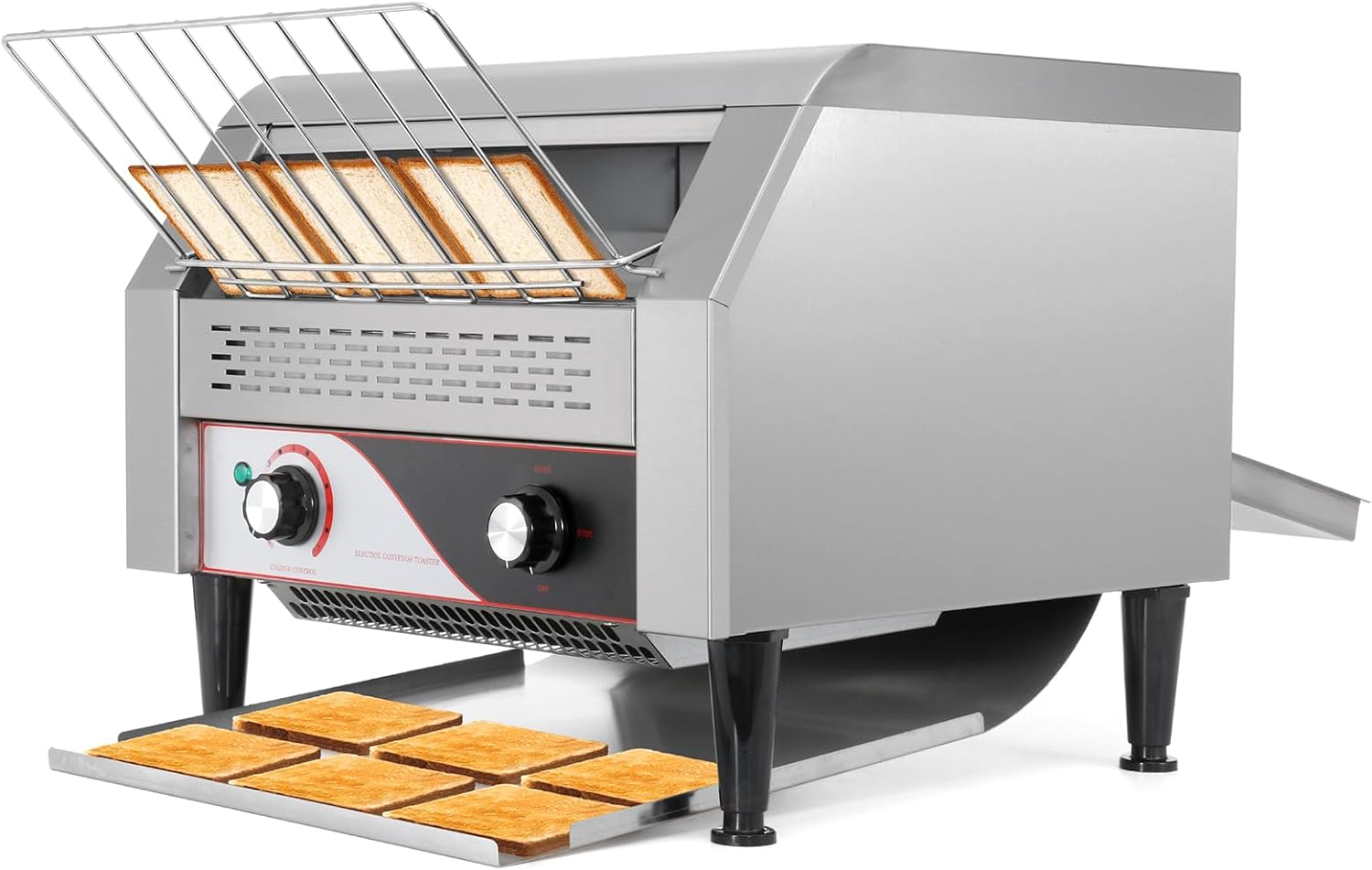
Most units have these parts:
- Feed area: The place where you set the bread or other approved food.
- Conveyor belt: Carries food through the toaster.
- Heating chamber: Contains the heating elements.
- Speed control: Changes the belt rate and toast time.
- Heat or browning control: Adjusts the amount of heat on some models.
- Exit tray: Catches the toasted food.
- Front and rear openings: Allow food to enter and leave the chamber.
- Crumb tray: Collects crumbs and small debris.
- Rear discharge guide: Sends toast toward the front or back, depending on the setup.
Some conveyor toasters are designed for bread only. Others may support buns, bagels, English muffins, or selected frozen products. Do not assume that a food is safe to use just because it fits through the opening. Check the product label and the toaster manual first.
How the controls work
A conveyor toaster usually controls browning in two ways:
- Belt speed: A slower belt keeps food in the heated chamber longer and usually creates darker toast.
- Heat level: A higher heat setting adds more energy while the food passes through.
The relationship is not always exact. Bread thickness, moisture, sugar, fat, starting temperature, and loading pattern all affect the result. A thick, cold slice may need a slower speed than a thin slice at the same heat setting.
Some models have separate top and bottom heat controls. Others use fixed heating elements and only provide a speed control. The name of each control can also differ, so use the labels on your unit rather than relying on a standard control layout.

What You Need Before Using a Conveyor Toaster
Before turning on a conveyor toaster, make sure the unit is suitable for the outlet, food, workspace, and planned use. A short check can prevent burns, smoke, uneven toast, and electrical problems.
Check the machine
Confirm that:
- The toaster is on a stable, level, heat-resistant surface.
- The power cord and plug show no cuts, melting, or other damage.
- The crumb tray is installed.
- The belt is free of large crumbs and foreign objects.
- The feed and exit openings are clear.
- Required air space surrounds the unit.
- Nearby paper, towels, plastic, oil, and other flammable items are moved away.
- The unit is connected to the electrical supply listed on its data plate.
- The ventilation fan, if fitted, is working as intended.
Do not place the toaster under items that could block heat or airflow. Commercial models can release substantial heat during use. Follow the clearance distances in the installation manual instead of guessing.
Check the food
Use food that the manual allows. Standard sliced bread is the simplest starting point. Before loading, remove packaging, twist ties, paper, and loose labels.
Do not place these items in a conveyor toaster unless the manufacturer specifically permits them:
- Foil-wrapped food
- Plastic-wrapped food
- Food in paper packaging
- Foods with loose toppings
- Wet batter
- Large pieces that can touch the heating elements
- Items that can drip grease into the chamber
- Oversized bread or products that can jam the belt
A conveyor toaster browns food. It may warm or toast a product without heating its center to a safe cooking temperature. Do not use it as a substitute for a food-safe cooking step.

How to Use a Conveyor Toaster Step by Step
Use the following process for standard sliced bread. Adjust it to match the instructions for your model.
1. Install the trays and guides
Place the crumb tray, exit tray, and any feed guides in their correct positions. Make sure each part sits securely and does not touch the belt.
A missing tray can allow crumbs to collect under the heating area. A misplaced guide can restrict the belt or cause bread to tip sideways.
2. Set the discharge direction
Some conveyor toasters can send toast toward the front or rear. Set the discharge guide before heating the unit.
Choose the exit that gives staff or users enough space to collect the toast without reaching over hot surfaces. If the model has a removable rear discharge tray, install it according to the manual.
3. Turn on the toaster
Switch on the main power. If the unit has separate switches for the conveyor and heating elements, follow the startup order in the manual.
Many commercial toasters need a preheat period. Wait until the unit reaches its operating condition before judging the first batch. Toasting bread in a cold chamber can produce pale or uneven results.
4. Choose a starting belt speed
Start at a middle setting when you do not know the correct adjustment. A middle setting gives you a useful baseline without making the first batch extremely pale or burnt.
The correct speed depends on:
- Bread thickness
- Bread moisture
- Bread temperature
- Sugar and fat content
- Desired browning
- Heat setting
- Number of slices loaded at once
A slower belt generally produces darker toast. A faster belt generally produces lighter toast.
5. Adjust the heat setting
Set the heat to the level recommended for your product and model. If the unit has separate top and bottom controls, use a balanced setting first.
Avoid using maximum heat as a shortcut. High heat can brown the outside before the inside warms, scorch sugary products, and increase smoke from crumbs or residue.
6. Load the bread in one layer
Place slices flat on the feed area. Keep them centered and separate unless the manual gives different instructions.
Do not push bread into the heating chamber. Let the belt carry it forward. Keep fingers, utensils, clothing, and hair away from the moving belt and hot openings.
For consistent results, load slices with similar thickness and moisture in the same batch. Mixing thin white bread with thick, dense bread makes it harder to choose one setting that works for all slices.
7. Watch the first pieces
Collect the toast from the exit tray. Check its color, surface, texture, and temperature.
The first batch tells you whether to change the belt speed, heat, product position, or loading pattern. Make one adjustment at a time so you can see what caused the change.
8. Fine-tune the setting
Use these general corrections:
- Toast is too light: Reduce belt speed slightly or increase heat if the manual allows it.
- Toast is too dark: Increase belt speed slightly or reduce heat.
- Top is dark but the bottom is pale: Reduce top heat, increase bottom heat, or check whether the product is sitting correctly.
- Bottom is dark but the top is pale: Reduce bottom heat, increase top heat, or check the product position.
- Toast is uneven from slice to slice: Use a consistent loading position and check the belt for crumbs or damage.
- Bread jams: Stop the machine safely and follow the jam-clearing instructions in the manual.
Small adjustments work better than large changes. A single control change may affect every item that follows.
9. Keep loading at a steady pace
Once you find a suitable setting, load products at a consistent rate. Do not crowd the feed area unless the manual allows it.
Crowding can cause overlapping slices, uneven browning, belt drag, and jams. It can also make it difficult to identify which items need adjustment.
10. Turn the unit off when finished
Follow the manufacturer’s shutdown procedure. Some models require the conveyor to run for a short time after the heat is turned off. This can help move food out and reduce residual heat in the chamber.
Do not touch internal parts until the unit has cooled. Never leave a hot conveyor toaster unattended in a setting where people may approach it without training.

How to Get Even Toast Every Time
Even toast depends on controlling the product, the belt, and the heat. The most useful improvement is consistency.
Use the same bread type, slice thickness, and loading position when setting up a batch. If the bread changes, expect the result to change as well. Fresh bread, frozen bread, dense whole-grain bread, and sweet bread do not toast at the same rate.
A simple adjustment method
Use this three-step method:
- Toast one or two test pieces.
- Change only the belt speed or heat setting.
- Test again before changing another control.
If the toast is too dark but looks evenly browned, change the belt speed first. If one surface is much darker than the other, adjust the heat balance or inspect the product path.
Example settings process
This example is a method, not a universal setting:
| Result from the test batch | Likely adjustment |
|---|---|
| Pale on both sides | Slow the belt slightly or raise heat |
| Dark on both sides | Speed up the belt or lower heat |
| Dark outside, soft center | Use a lower heat with a slower pass if the product permits |
| One side darker | Balance the top and bottom heat |
| Dark spots or stripes | Check belt cleanliness, product placement, and heating elements |
| Some slices pale and others dark | Standardize bread type, spacing, and slice position |
Do not copy a setting from another toaster unless the model, food, and operating conditions are comparable. Two units with similar controls may have different heating capacity and belt speed ranges.

How to Toast Bagels, Buns, and Specialty Bread
Use a bagel, bun, or specialty setting only when the toaster manual supports that product. The correct direction often depends on which cut surface should face the heating element.
For bagels and English muffins:
- Split the product fully before loading.
- Keep the cut surface in the position recommended by the manual.
- Watch for loose crumbs and seeds.
- Test a small batch before starting full production.
For buns:
- Confirm that the bun size fits without touching the chamber.
- Use the correct orientation for the cut side.
- Avoid products with loose fillings or toppings.
- Check whether the manual allows buttered or oiled surfaces.
For frozen bread, follow the toaster and product instructions. Frozen food may require a different speed, heat level, or pass. Do not increase heat without checking for scorching or excess moisture.
A conveyor toaster may not be suitable for products with high fat, sugar, or moisture. These foods can drip, smoke, stick to the belt, or burn quickly.

Cleaning and Basic Maintenance
Turn off and unplug the toaster before cleaning, unless the manual gives a specific instruction for a safe cool-down cycle. Let all hot parts cool first.
A typical cleaning routine includes:
- Remove and empty the crumb tray.
- Clean the tray with the method approved by the manufacturer.
- Brush or wipe loose crumbs from accessible areas.
- Check the belt for stuck food or residue.
- Inspect the feed and exit areas.
- Wipe exterior surfaces with a suitable cloth and cleaner.
- Reinstall dry parts correctly.
Do not immerse the toaster unless the manual specifically says that the part is removable and washable. Keep water away from switches, motors, heating elements, and electrical connections.
Avoid metal tools that can damage the belt or heating elements. Do not use abrasive cleaners on surfaces that can scratch or shed material. Never spray cleaner into the heated chamber or onto an energized appliance.
When to stop using the toaster
Stop operation and disconnect power if you notice:
- A damaged cord or plug
- Repeated circuit trips
- Burning plastic or electrical odor
- Sparks
- Smoke that does not come from normal food residue
- A belt that stalls or slips
- A heating element that glows abnormally
- A cracked panel or loose guard
- Repeated jams after cleaning and proper loading
Do not bypass a safety switch or attempt electrical repair without the required training. In a commercial kitchen, report the problem to the responsible manager or qualified service technician.

Conveyor Toaster Safety Rules
A conveyor toaster combines heat, electricity, moving parts, and food debris. Basic controls reduce the risk of burns, fire, electrical shock, and equipment damage.
- Keep hands and utensils away from the moving belt.
- Use tongs only when the manual permits them and the unit is stopped if required.
- Never reach into a hot chamber to remove a stuck item.
- Disconnect power before clearing a jam or servicing the unit.
- Keep combustible materials away from the toaster.
- Do not operate a damaged appliance.
- Keep children and untrained users away from commercial equipment.
- Use the correct grounded outlet and circuit.
- Do not block ventilation openings.
- Keep the toaster under the supervision required by your workplace procedures.
- Follow the manufacturer’s fire and cleaning instructions.
If food catches fire, turn off power if it is safe to do so and follow the workplace fire procedure. Do not use water on an energized electrical appliance or a grease-related fire. Use the appropriate fire extinguisher only if trained and only when you have a clear exit.
U.S. workplaces should also follow applicable Occupational Safety and Health Administration requirements, local fire codes, and the equipment manufacturer’s instructions. The exact requirements can vary by location and installation.

Troubleshooting a Conveyor Toaster
Start with the safest and simplest checks. Do not open electrical panels or remove fixed guards unless you are qualified and authorized.
| Symptom | Possible causes | Safe first checks |
|---|---|---|
| Toaster does not start | No power, tripped breaker, switch problem | Check the plug, approved outlet, and power switch |
| Belt does not move | Conveyor switch off, jam, drive problem | Turn off and unplug; inspect only accessible areas |
| Bread is too pale | Belt too fast, low heat, cold or thick bread | Slow the belt slightly and test one piece |
| Bread burns | Belt too slow, high heat, crumbs or residue | Speed up slightly, lower heat, and clean after cooling |
| Toast is uneven | Product placement, mixed bread types, dirty belt | Center similar slices and clean the belt when cool |
| Smoke appears | Crumbs, grease, sugary food, foreign material | Turn off safely, unplug when appropriate, and allow cooling |
| Bread sticks | Moist product, residue, wrong product type | Stop using that product and check the manual |
| Food jams | Oversized food, overlapping slices, damaged belt | Disconnect power before clearing the obstruction |
If the problem returns after the basic checks, stop using the toaster. Repeated faults may indicate a worn belt, motor issue, thermostat problem, damaged heating element, or electrical defect.

Common Mistakes to Avoid
The most common operating mistakes come from treating every conveyor toaster and every bread product as if they were the same.
Using maximum heat first
Maximum heat can burn the surface before the product passes through evenly. Start at a moderate setting and make small changes.
Overloading the feed area
Overlapping slices block heat and can cause uneven browning or a jam. Feed one layer with space between pieces when needed.
Reaching into the toaster
A stuck slice is not worth a burn or electrical injury. Turn off, unplug, allow the unit to cool, and follow the jam-clearing procedure.
Ignoring crumbs
Crumbs can smoke and may create a fire risk near heating elements. Empty the crumb tray on the schedule set by the manufacturer and workplace.
Toasting unapproved foods
Greasy, sugary, wet, or wrapped foods can damage the toaster or create smoke. Check the manual before changing products.
Changing several controls at once
If you change belt speed, heat, product type, and loading position together, you cannot tell which change helped. Adjust one variable at a time.

Frequently Asked Questions
Do you put bread in a conveyor toaster vertically or horizontally?
Place bread in the orientation shown in the manual and keep it flat on the conveyor. Most sliced bread is loaded flat, but bagels, buns, and specialty products may require a specific cut-side position.
How long does bread stay in a conveyor toaster?
The belt speed determines the pass time. A slower belt gives a longer exposure, while a faster belt gives a shorter exposure. Because models differ, use the manufacturer’s setting range instead of relying on a universal number of seconds.
Can you toast frozen bread in a conveyor toaster?
Sometimes, but only when the toaster and product instructions allow it. Frozen bread may need a different speed or heat level. Test a small batch and check that the center is heated as intended without burning the outside.
Why does my conveyor toaster toast unevenly?
Common causes include mixed bread thicknesses, inconsistent placement, a dirty or damaged belt, unbalanced top and bottom heat, or a product that does not suit the toaster. Change one factor at a time after the unit cools.
Can you put buttered bread in a conveyor toaster?
Do not do so unless the manufacturer specifically approves it. Butter and oil can drip onto hot components, create smoke, and increase fire risk. Use the toaster only for products listed in the manual.
Key Takeaways
- A conveyor toaster uses belt speed and heat to control browning.
- Check the manual, power supply, clearance, trays, belt, and crumb tray before use.
- Start with moderate settings and test a small batch.
- Load similar products in one layer and keep hands away from the moving belt.
- Make one adjustment at a time.
- Unplug and cool the toaster before clearing jams or cleaning.
- Stop using the unit if it sparks, smokes abnormally, trips the circuit, or shows mechanical damage.
Conclusion
To use a conveyor toaster well, focus on steady loading, the right belt speed, suitable heat, and regular cleaning. Begin with a small test batch, adjust gradually, and use only foods approved for the model.
Your next step is to find the toaster’s model number and read the sections on startup, approved products, belt adjustment, cleaning, and jam removal. Those instructions determine the safe operating limits for your specific machine.