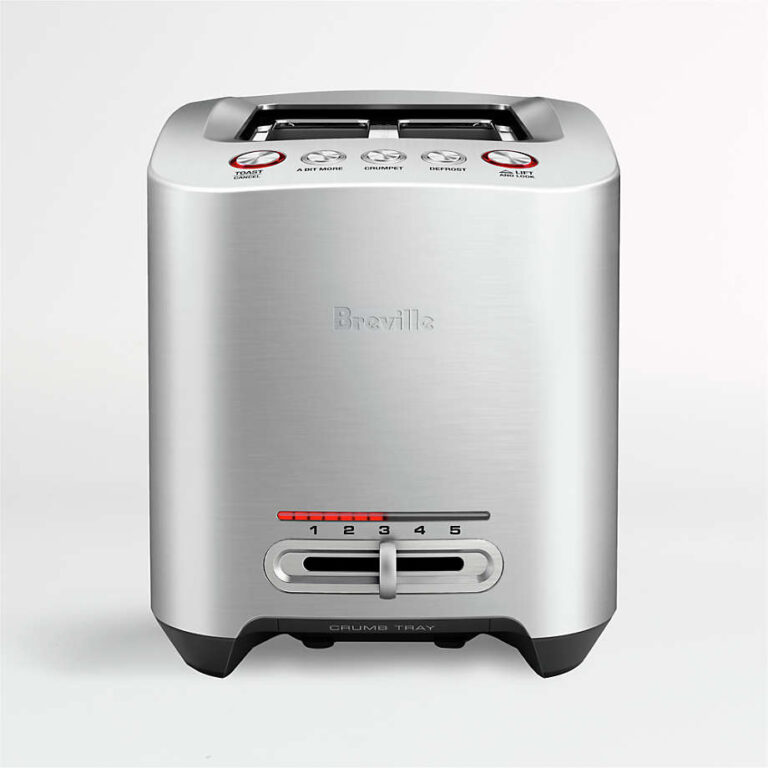
How Much Does A Quad Toaster Cost: 2026 Price Guide
A quad toaster, also called a four-slice toaster, usually costs $25 to $150 in the United States. Basic models often sell for $25 to $50, mid-range models cost $50 to $100, and premium or specialty models can reach $100 to $300 or more.
Commercial four-slot toasters may cost more. Heavy-duty restaurant models commonly range from $150 to over $1,000, depending on their speed, heating system, capacity, and electrical requirements.
Introduction
For most US households, a four-slice toaster costs about $40 to $80 before sales tax. The final price depends on the brand, body material, controls, slot size, warranty, and whether the toaster has extra features such as long slots, digital timers, or automatic lift functions.
The term “quad toaster” can mean two different products:
- A four-slice household toaster for bread, bagels, waffles, and similar foods.
- A commercial four-slot or conveyor toaster for restaurants, hotels, cafeterias, or high-volume kitchens.
This guide focuses first on household models, then explains commercial prices and the costs that buyers often miss.
Quad Toaster Price Ranges in the United States
The main price bands are easy to understand: a low-cost toaster handles basic toast, while higher-priced models usually add better controls, larger slots, stronger construction, or a more specialized design.
| Quad toaster type | Typical US price before tax | Best for |
|---|---|---|
| Basic four-slice toaster | $25–$50 | Small budgets and simple daily use |
| Mid-range four-slice toaster | $50–$100 | Most families and regular home use |
| Premium household toaster | $100–$200 | Design, stronger build, and advanced controls |
| Specialty long-slot toaster | $70–$180 | Artisan bread and uneven bread sizes |
| Commercial four-slot toaster | $150–$500 | Small food businesses and light commercial use |
| High-volume commercial toaster | $500–$1,500+ | Restaurants, hotels, and institutional kitchens |
These are useful buying estimates, not fixed prices. Sales, seasonal promotions, brand changes, shipping charges, and local sales tax can change the final amount.
A $40 toaster bought in a state with no sales tax may cost close to its listed price. In another state, the total may be several dollars higher. Delivery fees can also matter when buying a low-cost appliance online.
What Does a Basic Four-Slice Toaster Cost?
A basic four-slice toaster generally costs $25 to $50 in the US. These models usually have two independent pairs of slots, browning dials, a cancel button, and simple functions for toast and bagels.
At this price, expect a plastic housing or a mix of plastic and metal. The toaster may work well for standard sandwich bread, but it may have narrower slots, less even browning, and fewer controls than a more expensive model.
A basic toaster may be a good fit when:
- You toast a few slices per day.
- You use standard sliced bread.
- You do not need digital timing.
- You want an inexpensive replacement.
- The toaster will be used in a dorm, rental, office, or guest kitchen.
The lowest price is not always the lowest total cost. A very cheap toaster may have a short warranty, weak controls, or poor access to replacement service. Check the return policy before buying.
What Does a Mid-Range Quad Toaster Cost?
A mid-range four-slice toaster usually costs $50 to $100. This is the most practical range for many US families because it offers more control without the price of a premium appliance.
Common features include:
- Two separate browning controls.
- Wider slots for bagels and thick bread.
- Bagel, defrost, and reheat settings.
- Removable crumb trays.
- Better insulation around the outer body.
- More stable feet and stronger control levers.
The key benefit is flexibility. Two people can toast different types of bread at the same time, using different browning settings. That makes a four-slice toaster more useful than a two-slice model for busy households.
A mid-range toaster is often the best value when you want regular daily use but do not need restaurant-level speed or a designer finish.
What Does a Premium Four-Slice Toaster Cost?
Premium household models commonly cost $100 to $200. Some specialty or designer models cost $200 to $300 or more.
The higher price may pay for:
- Stainless steel or other durable exterior materials.
- Long slots for sourdough and artisan bread.
- Digital countdown displays.
- Automatic bread centering.
- Motorized lift systems.
- More exact browning controls.
- A longer stated warranty.
- A specific design or color.
A premium toaster does not always toast twice as well as a $60 model. Price often reflects materials, design, brand position, controls, and warranty support. Independent testing would be needed to prove that a particular model browns more evenly or lasts longer.
For that reason, focus on the feature that solves your problem. If your main issue is thick bread, buy a model with wide or long slots. If your issue is different preferences in the same home, prioritize independent controls.
What Does a Commercial Quad Toaster Cost?
A commercial four-slot toaster generally costs $150 to $500, while high-volume conveyor models can cost $500 to $1,500 or more.
Commercial equipment costs more because it may include:
- Faster recovery between batches.
- Larger heating elements.
- Metal construction.
- Higher daily operating capacity.
- More durable controls.
- Commercial electrical components.
- Safety or sanitation requirements for food-service settings.
A restaurant should not assume that a household four-slice toaster is suitable for commercial use. A home model may not be designed for long operating periods, repeated batches, or commercial inspection requirements.
Before buying, confirm the model’s electrical rating, approval markings, warranty terms, ventilation needs, and suitability for the intended business. Local building, fire, and health rules may also apply.
What Changes the Price of a Quad Toaster?
The biggest price factors are slot design, controls, construction, heating performance, and intended use.
Slot Size and Shape
Standard slots work well for common sandwich bread. Wide slots help with bagels, Texas toast, English muffins, and thick homemade slices.
Long-slot models can handle larger pieces of bread without forcing the user to cut them down. They may cost more because they use a different heating layout and body design.
Independent Controls
Many four-slice toasters use two control groups. Each group operates two slots.
This matters when one person wants light toast and another wants dark toast. A model with only one shared control may cost less, but it offers less flexibility.
Digital Controls
Digital screens and countdown timers can make the toaster easier to monitor. They also add electronics and may raise the price.
A display is useful if you often stop the cycle early or want repeatable settings. It is less valuable if you simply turn a dial and check the toast when it pops up.
Housing Material
Plastic models are often less expensive and lighter. Stainless steel models may look more substantial, but a metal exterior alone does not prove that the internal parts are stronger.
Look at the full specification, warranty, return policy, and user manual rather than paying only for a shiny finish.
Brand and Warranty
Established brands may charge more because they offer wider distribution, customer service, or longer warranty coverage. A warranty does not guarantee long life, but it can reduce the cost of an early failure.
Read what the warranty covers. Some warranties exclude commercial use, misuse, cosmetic damage, or damage caused by incorrect cleaning.
Sales and Retailer Pricing
Toaster prices often change during:
- Black Friday and Cyber Monday.
- Back-to-school sales.
- Holiday promotions.
- Kitchen appliance clearance events.
- Store-brand promotions.
- Open-box or refurbished sales.
Compare the total checkout price. A lower listed price may be offset by shipping, a shorter warranty, or a difficult return process.
How Much Does It Cost to Run a Quad Toaster?
Electricity usually adds only a small amount to the cost of using a household toaster.
A typical four-slice toaster may use roughly 1,400 to 1,800 watts while heating, although the exact rating depends on the model. If a 1,600-watt toaster runs for five minutes, the energy use is:
1.6 kilowatts × 0.083 hours = about 0.13 kilowatt-hours
At an electricity rate of $0.16 per kilowatt-hour, that cycle would cost about 2 cents.
This is a hypothetical calculation. Your actual cost depends on the toaster’s wattage, heating time, electricity rate, and how often you use it.
The purchase price usually matters more than the electricity cost for normal home use. Commercial kitchens are different because equipment may run for many hours and process far more food.
Four-Slice Toaster Versus Two-Slice Toaster
A four-slice toaster usually costs more than a two-slice model, but the price difference can be worthwhile for a family or shared kitchen.
| Feature | Two-slice toaster | Four-slice toaster |
|---|---|---|
| Typical home price | About $15–$100+ | About $25–$200+ |
| Toasting capacity | Two slices per cycle | Four slices per cycle |
| Counter space | Uses less | Uses more |
| Power demand | Usually lower | Usually higher |
| Best for | One person or light use | Families and shared kitchens |
A four-slice toaster is not always faster in real use. If the four slots share a limited heating system, the toaster may need more time to brown all four slices evenly.
Measure your counter before buying. Also check the outlet location and cord length. Do not use a toaster where the cord hangs over the counter or touches a hot surface.
How to Choose a Quad Toaster at the Right Price
Start with the problem you need the toaster to solve, not with the highest feature count.
Choose a Basic Model if:
- You use standard bread.
- You toast only once or twice a day.
- You have a strict budget.
- You do not need separate settings.
- You can accept a simpler design.
Choose a Mid-Range Model if:
- Several people use the toaster.
- You toast bread and bagels.
- Two people prefer different browning levels.
- You want better controls and construction.
- You expect frequent use.
Choose a Premium Model if:
- You use thick or irregular bread.
- Appearance matters in a visible kitchen.
- You want a countdown display or motorized lift.
- You value a longer warranty.
- You have checked that the extra features solve a real need.
Choose a Commercial Model if:
- The toaster will serve customers.
- It will run for long periods.
- You need fast batch production.
- The manufacturer approves it for commercial use.
- Local rules require commercial equipment.
Do not buy a commercial toaster for a normal home kitchen unless you need its capacity. It may use more power, take more space, and cost more to repair.
Hidden Costs to Include in Your Budget
The listed price is only one part of the purchase.
Sales Tax
Most US states charge sales tax on many retail appliance purchases. The rate varies by state, county, and city.
Shipping
Large stainless-steel models may have higher shipping costs. Check whether delivery is included before comparing prices.
Return Costs
A toaster that browns unevenly, smells strongly after the first uses, or does not fit your bread may need to be returned. A free return policy can be more valuable than a small discount.
Replacement Cost
A low-cost toaster may be cheaper to replace than repair. Many household toaster repairs are not economical because labor can exceed the appliance price.
Counter Space
A four-slice toaster needs more room than a two-slice model. If you must buy a new shelf, cart, or storage unit, include that cost.
Commercial Installation
A commercial toaster may require a suitable outlet, dedicated circuit, ventilation, or inspection. Ask a qualified electrician or local authority before changing electrical service.
Safety and Maintenance Tips
A toaster should sit on a stable, dry, heat-safe surface with open space around it. Keep it away from water, curtains, paper towels, and other materials that can burn.
Follow these basic practices:
- Unplug the toaster before cleaning it.
- Empty the crumb tray often.
- Do not insert knives, forks, or other metal objects.
- Do not toast food with loose fillings that can drip inside.
- Watch the toaster during use.
- Stop using it if the cord, plug, or housing is damaged.
- Do not cover the toaster while it is hot.
- Keep children away from the appliance during operation.
Never try to retrieve stuck toast with a metal utensil while the toaster is plugged in. If the toaster smokes, sparks, trips a breaker, or smells like burning plastic, unplug it if you can do so safely and stop using it.
Look for recognized electrical safety markings suitable for the US market, such as marks from an accredited testing organization. A safety mark does not prove that a toaster will last longer, but it can indicate that the product was evaluated under applicable electrical safety requirements.
Common Mistakes When Buying a Four-Slice Toaster
The most common mistake is paying for features without checking whether the toaster fits the bread and space you actually use.
Avoid these errors:
-
Buying narrow slots for thick bread
Check the slot width and length in the product specifications. -
Assuming four slots always mean four independent settings
Some models use two control groups rather than four separate controls. -
Ignoring wattage
A high-wattage model may need more electrical capacity than an older kitchen circuit can comfortably support. -
Choosing by appearance alone
A metal shell does not prove better heating or longer life. -
Skipping the warranty details
Confirm the warranty period and whether household-only use is required. -
Using a household toaster in a business
Commercial use may void the warranty and may not meet local requirements. -
Failing to measure the counter
Four-slice toasters can be wide, deep, and difficult to store.
Key Takeaways
- A household quad toaster usually costs $25 to $150 in the US.
- Most buyers will find suitable models between $40 and $80.
- Premium models may cost $100 to $300 or more.
- Commercial four-slot toasters commonly start around $150 and can exceed $1,000.
- Slot size, independent controls, build materials, warranty, and commercial rating affect the price.
- Include sales tax, shipping, return costs, and counter space in your budget.
- For safety, unplug the toaster before cleaning and never use metal tools to remove stuck food.
Frequently Asked Questions
Is a four-slice toaster worth the extra money?
It can be worth the extra money for families, couples with different toast preferences, and people who toast several slices at once. A two-slice toaster may be better for a single user with limited counter space.
What is a good price for a quad toaster?
For most US households, $50 to $100 is a reasonable target. This range often includes independent controls, wider slots, bagel settings, and a removable crumb tray without paying mainly for luxury design.
Are expensive toasters better?
Not always. Higher prices may reflect materials, design, controls, warranty service, or brand position. Check independent testing when available, and compare the exact features that matter to you.
How many watts does a four-slice toaster use?
Many household four-slice toasters are rated at roughly 1,400 to 1,800 watts, but the exact number varies. Check the label or manual for the model you plan to buy.
Can I use a household quad toaster in a restaurant?
Usually, you should choose equipment specifically approved and warranted for commercial use. A household toaster may not tolerate continuous service and may fail to meet local business, electrical, fire, or health requirements.
Conclusion
A quad toaster costs about $25 to $150 for typical home use in the United States, with the strongest value often found in the $50 to $100 range. Basic models suit occasional use, while premium models make sense when you need long slots, advanced controls, or a specific design.
Before buying, measure your counter, check the slot size and wattage, confirm the warranty, and compare the final price after tax and shipping. If the toaster will operate in a business, choose a commercial model and verify local requirements first.