How Does A Glass Toaster Work: Inside The Technology
Introduction
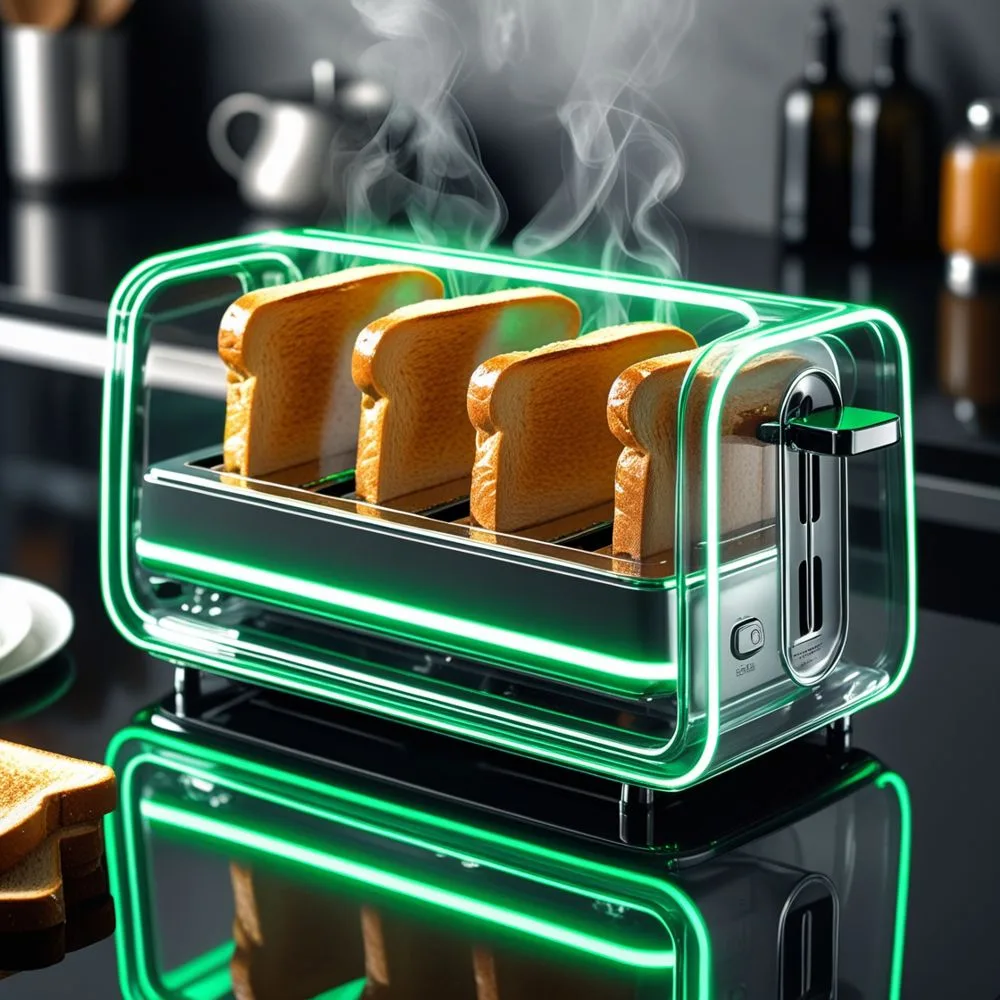
In a U.S. kitchen, a glass toaster works much like a standard electric toaster. It uses electric heating elements to turn bread moisture into toast. The clear panels let you watch the bread as it browns.
Most glass toasters do not toast with glass. The glass is usually a heat-resistant viewing panel. Metal heating elements sit beside the bread. A control system manages heat and time. A spring-loaded carriage holds the bread near the elements.
This guide explains how a glass toaster works, what each part does, and how to use one safely with a typical U.S. household outlet.

<figcaption style=”font-size:14px;color:#555;margin-top:8px;”>
Source: stylishhomeidea.net
What Is a Glass Toaster?
A glass toaster is a toaster with clear heat-resistant panels or a clear bread chamber. The design gives you a direct view of the bread while it cooks.
The term can describe several designs:
- A toaster with glass side panels
- A toaster with a clear vertical chamber
- A toaster with a glass viewing window
- A toaster that combines toasting with a small oven or griddle
The exact design varies by brand and model. Some products use borosilicate glass or another heat-resistant glass. Others use clear panels with a separate metal frame. Check the product manual for the material and cleaning rules.
A glass toaster still needs the same basic parts found in a regular toaster:
- Heating elements
– Bread slots or a bread chamber - A lever or lift mechanism
- Browning controls
- A timer or electronic control board
- A thermostat or heat sensor
- A crumb tray
- A power cord and plug
The glass mainly changes visibility. It does not remove the need for heating coils, temperature control, or electrical protection.

How Does a Glass Toaster Work?
A glass toaster works by sending electricity through resistance heating elements. The elements become hot and release infrared heat. That heat dries and browns the exposed surfaces of the bread.
Here is the basic process:
- You place bread into the slot or chamber.
- You press the lever or start control.
- The bread moves near the heating elements.
- Electric current flows through the elements.
- The elements heat the bread surface.
- A timer or sensor ends the cycle.
- The carriage lifts the toast.
The heating elements often use resistance wire, such as nichrome. This wire resists the flow of electricity. The resistance changes electrical energy into heat.
The hot elements also emit infrared radiation. The bread absorbs this energy. Water near the surface turns into vapor, and chemical reactions darken the bread.
Why bread turns brown
Toasting involves more than simple drying. Two processes help create the color and flavor:
- The Maillard reaction: Heat causes sugars and amino acids on the bread surface to react. This creates brown color and toasted flavors.
- Caramelization: Sugars break down at higher heat and add darker color and a sweet, roasted taste.
These reactions happen mainly at the dry surface. The inside of the bread stays softer because it contains more moisture.
How the glass affects the process
The glass panels do not usually create the heat. They help contain the hot air and let you see the bread.
A glass panel may also:
- Reduce direct contact with the heating elements
- Help shield the user from hot parts
- Keep the bread area enclosed
- Allow the user to stop the cycle before the bread burns
The outside of the glass can still become hot. A clear wall is a viewing surface, not a safe-to-touch surface.

What Parts Control the Toasting Cycle?
A glass toaster uses mechanical and electronic parts to control heat, time, and bread position.
Heating elements
Heating elements provide the main heat. Many toasters place elements on both sides of the bread. Some transparent models use elements behind or beside a flat glass chamber.
The elements may glow red or orange during operation. That glow is normal for many designs. Do not touch them, even after the toaster stops. They can remain hot for several minutes.
Browning control
The browning dial changes the length of the heating cycle on many models. A higher setting usually means a longer cycle. It does not always mean a much higher element temperature.
The same dial setting can produce different results based on:
- Bread thickness
- Bread moisture
- Bread type
- Starting temperature
- Number of slices
- Voltage
- The toaster’s calibration
A thin, dry slice may brown faster than a thick slice at the same setting.
Timer
A timer ends the heating cycle after a set period. In a simple toaster, the timer may use a mechanical bimetal strip. In a newer model, an electronic control board may track time.
A mechanical system may respond to heat. An electronic system may use a sensor, programmed timing, or both.
Thermostat and sensors
A thermostat helps limit temperature. Some models also use sensors to detect heat, bread position, or cooking progress.
Sensor systems differ. A sensor may measure:
- Air temperature
- Heat near the bread
- The temperature of an internal part
- The amount of light reflected from the bread
Do not assume that every glass toaster measures toast color directly. Many models simply use a timed cycle.
Carriage and lift system
The lever lowers the bread into position. It may also start the electrical circuit. At the end of the cycle, a spring raises the bread.
A high-lift feature lets you raise small pieces above the slot. Use it instead of reaching into the toaster with a knife or fork.
Crumb tray
The crumb tray catches loose bread particles. Crumbs can collect near hot elements. Clean the tray often, but unplug the toaster and let it cool first.
Do not shake a plugged-in toaster over a sink. Loose crumbs may fall deeper into the housing or contact hot parts.

Why Does a Glass Toaster Toast Unevenly?
Uneven toast usually comes from bread position, moisture, heat distribution, or a dirty toaster. The glass itself is not always the cause.
Common causes include:
- The bread sits too close to one heating element.
- One element is damaged or weak.
- The slices have different moisture levels.
- The bread is too thick for the chamber.
- Crumbs block heat or affect the mechanism.
- The cycle setting is too high or too low.
- The bread is not centered.
A transparent design may make uneven browning easier to notice. It does not necessarily create more uneven heat than a metal toaster.
How to improve browning
Try these steps:
- Use slices with a similar size and moisture level.
- Center the bread if the design allows it.
- Start with a medium setting.
- Watch the first cycle through the glass.
- Lower the setting for dry bread.
- Raise the setting slightly for thick or moist bread.
- Clean the crumb tray after the toaster cools.
If one side stays pale during several cycles, stop using the appliance until you inspect the manual or contact the manufacturer. A failed heating element can create poor results and may increase the risk of overheating.

How to Use a Glass Toaster Safely
Use a glass toaster on a stable, dry surface with open space around it. Keep curtains, paper towels, plastic items, and other flammable materials away from the appliance.
The U.S. Consumer Product Safety Commission warns that unattended cooking appliances can cause fires. Follow the instructions supplied with your model and stay nearby while the toaster operates. You can review general home fire guidance from the U.S. Consumer Product Safety Commission and the National Fire Protection Association.
Follow these safety rules:
- Plug the toaster into a suitable U.S. outlet.
- Do not use an extension cord unless the manual allows it.
- Keep the toaster away from water.
- Do not cover the toaster while it is running.
- Never place metal utensils inside it.
- Unplug it before cleaning or moving it.
- Let the glass cool before touching or wiping it.
- Stop using it if the cord, plug, glass, or housing is damaged.
- Do not operate it if the glass is cracked.
- Never leave bread cooking while you leave the room.
- Keep children away from the hot surface.
What to do if bread gets stuck
If bread becomes stuck:
- Cancel the cycle if the model has a cancel button.
- Unplug the toaster.
- Wait until all parts are cool.
- Remove the bread with your fingers only if it is safe to do so.
- Do not use a knife, fork, or other metal tool.
- Contact the manufacturer if the bread cannot be removed safely.
Bread can contain metal clips, foil, fillings, or toppings that may create a hazard. Do not place foil-wrapped food into a normal toaster unless the manufacturer clearly permits it.
Is the glass safe?
Heat-resistant glass can still break. Sudden temperature changes, impact, manufacturing defects, or a weakened frame may damage it.
Do not pour water on hot glass. Do not use the toaster if you see:
- A crack
- A chip
- A loose panel
- A sharp edge
- A blackened area near a heating element
- Smoke or a burning electrical smell
A damaged glass toaster should be unplugged and removed from service. Do not try to repair the glass with household glue.

Glass Toaster vs. Standard Toaster
A glass toaster and a standard toaster use the same basic heating idea. The main difference is that the glass model gives you more visibility.
| Feature | Glass toaster | Standard toaster |
|---|---|---|
| Heating method | Electric resistance elements | Electric resistance elements |
| Bread visibility | Usually high | Often limited |
| Main body material | Glass with metal or plastic parts | Usually metal or heat-resistant plastic |
| Browning control | Timed or sensor-based | Timed or sensor-based |
| Surface temperature | Can become hot | Can become hot |
| Cleaning concern | Glass and crumbs need care | Crumbs and slots need care |
| Main benefit | Easier visual control | Familiar design and broad availability |
The key advantage of a glass toaster is control by sight. You may stop the cycle before the bread becomes too dark. The trade-off is that the glass can add weight, cost, and another surface that may break.
A glass design does not automatically toast faster, use less energy, or brown bread more evenly. Those results depend on the heating elements, control system, chamber design, and model settings.

What Can You Toast in a Glass Toaster?
Toast only foods that the manual approves. A basic glass toaster is made for bread and similar dry slices. It may not be suitable for pastries with icing, cheese, butter, wet fillings, or loose toppings.
Avoid placing these items in a standard toaster unless the manufacturer gives specific instructions:
- Foods with runny fillings
- Cheese-covered bread
- Buttered bread
- Frosted pastries
- Foods wrapped in foil
- Wet or oily foods
- Oversized slices
- Food that can drip into the heating area
Drips can burn on the elements. They can also block moving parts or create smoke.
If you need to heat filled pastries, pizza, or open-faced food, use an appliance designed for that job, such as a toaster oven. Check the appliance manual for approved cookware and food types.

Glass Toaster Troubleshooting
Use the safest check first: stop the cycle, unplug the toaster, and let it cool before examining it.
| Symptom | Possible cause | Safe next step |
|---|---|---|
| No heat | No power, failed element, or control problem | Test the outlet with another safe appliance; then check the manual |
| Lever will not stay down | No power, blocked carriage, or internal fault | Unplug it and remove visible crumbs only after cooling |
| One side stays pale | Damaged element or poor bread position | Try a different slice; stop use if the problem continues |
| Toast burns quickly | High setting, dry bread, or sensor problem | Lower the setting; stop use if burning continues |
| Smoke appears | Crumbs, food residue, or electrical fault | Cancel, unplug, ventilate, and stop using it if smoke returns |
| Glass becomes cracked | Impact or heat stress | Unplug it and replace or service the toaster |
| Toast is hard to remove | Oversized food or mechanical problem | Do not use metal tools; contact the manufacturer if needed |
Do not open the housing unless the manufacturer specifically provides a safe service procedure. A toaster contains live electrical parts and heat-producing components. Many household toasters are not designed for consumer repair.

How Much Electricity Does a Glass Toaster Use?
A toaster’s energy use depends on its power rating and operating time.
Use this formula:
Energy used in kilowatt-hours = watts ÷ 1,000 × hours used
For a hypothetical 1,000-watt toaster used for 4 minutes:
- 4 minutes = 4 ÷ 60 hours
- 1,000 ÷ 1,000 × 0.067
- Energy used = about 0.067 kilowatt-hours
Your actual cost depends on your electric rate. If electricity costs 20 cents per kilowatt-hour, that cycle would cost about 1.3 cents.
This is only an example. Check the wattage label on your toaster and the current rate on your electric bill. A glass toaster is not automatically more efficient than a standard model. Heating power and cycle length matter more than the clear housing.

How to Clean and Maintain a Glass Toaster
Clean the crumb tray often and wipe the glass only after the toaster is unplugged and cool. Use a soft, slightly damp cloth unless the manual allows another method.
A simple maintenance routine is:
- Unplug the toaster.
- Let it cool completely.
- Remove and empty the crumb tray.
- Brush away loose crumbs with a dry, soft brush.
- Wipe the outside with a damp cloth.
- Dry all surfaces before plugging it in again.
- Check the cord, plug, glass, and frame for damage.
Never submerge a toaster in water. Do not spray cleaner into the slots, vents, controls, or heating chamber.
If the glass has baked-on residue, follow the manufacturer’s cleaning instructions. Abrasive pads can scratch the surface. Scratches may weaken glass over time, especially near hot areas.

Frequently Asked Questions
Does a glass toaster use real glass?
Many transparent toasters use heat-resistant glass, but materials vary by model. Some products use clear plastic or a combination of glass and plastic. Read the product specifications and manual instead of assuming that every clear toaster uses the same material.
Can I see the toast while a glass toaster is running?
Usually, yes. The clear chamber or side panels let you watch the bread brown. You still need to follow the manual and avoid touching the hot glass.
Does a glass toaster toast better than a regular toaster?
Not automatically. Both types usually rely on electric resistance heating. A glass model may help you stop the cycle at the color you want, but browning quality depends on the elements, controls, bread, and chamber design.
Why does my glass toaster smell when I use it?
A new appliance may release an odor during its first few uses as manufacturing residue heats. Follow the manual’s first-use instructions. Stop using the toaster if the smell is strongly electrical, if smoke continues, or if the cord or plug becomes hot.
Can a cracked glass toaster still work?
It may still heat, but you should not use it. A crack can worsen with heat and may create sharp edges or allow contact with hot or electrical parts. Unplug the appliance and follow the manufacturer’s replacement or service guidance.
Conclusion
A glass toaster works by passing electricity through resistance heating elements. The elements release heat and infrared energy, which dries and browns the bread. The glass usually serves as a viewing panel, not as the heating source.
The design can make browning easier to watch, but it does not guarantee faster or more even toast. Use the toaster only for approved foods, keep it clean, and stop using it if the glass, cord, plug, or heating system shows damage.
For the next step, check your model’s manual for its approved foods, cleaning method, glass material, and electrical rating.