How Much Does A Good Toaster Cost: Best Buying Guide
A good toaster usually costs $30 to $80 in the United States. This range covers most reliable two-slice and four-slice models with even browning, useful controls, and a solid warranty. Basic toasters may cost $15 to $30, while premium models can cost $100 to $300 or more.
For most U.S. households, the best value is often a toaster priced between $40 and $70. At this level, you can usually find better controls, wider slots, easier cleaning, and stronger build quality without paying mainly for design or brand status.
Prices change with sales, retailer, size, and features. A high price does not always mean better toast.

Toaster Prices at a Glance
The right budget depends on how often you toast, how many people use the appliance, and which bread types you buy.
| Toaster type | Typical U.S. price | Best for |
|---|---|---|
| Basic two-slice toaster | $15–$30 | Light use and small kitchens |
| Better two-slice toaster | $30–$70 | Daily use and most households |
| Basic four-slice toaster | $30–$60 | Families and shared kitchens |
| Better four-slice toaster | $50–$100 | Several users or frequent toast |
| Long-slot toaster | $40–$100 | Artisan bread and long slices |
| Premium toaster | $100–$300+ | Design, specialty controls, or brand preference |
| Commercial toaster | $150–$1,000+ | Restaurants and high-volume service |
These are practical retail ranges, not fixed prices. A model may sell for less during major U.S. shopping periods such as Memorial Day, Black Friday, or holiday clearance events.
A toaster priced at $20 can work well for occasional use. However, daily users may benefit from spending more on consistent heating, a stronger lever, better controls, and easier cleaning.

What Makes a Toaster “Good”?
A good toaster does more than heat bread. It should produce reasonably even color, fit the foods you eat, operate safely, and remain easy to clean.
Look for these features:
- Consistent browning: Each cycle should produce similar results at the same setting.
- Useful browning controls: The dial or digital control should offer clear, repeatable settings.
- Suitable slot size: Wide slots help with bagels, thick bread, and frozen waffles.
- Independent controls: Four-slice models are more useful when each pair of slots works separately.
- A high-lift lever: This makes small slices safer and easier to remove.
- A removable crumb tray: The tray should slide out without forcing it.
- A cool-touch exterior: This can reduce contact burns, but it does not make the toaster safe to touch everywhere.
- A cancel button: The button should stop the cycle without requiring you to unplug the appliance.
- A stable base: Non-slip feet help keep the toaster in place.
- A clear warranty: A longer warranty may show that the maker supports the product, but it does not guarantee perfect performance.
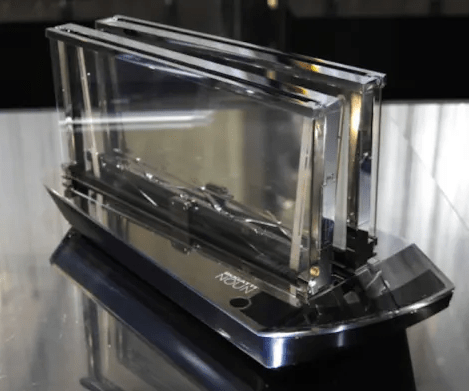
Some premium toasters add countdown timers, automatic lowering, touch controls, “extra lift,” sandwich cages, or special settings for frozen bread. These features may help, but they do not automatically improve browning.
The most important question is simple: Does the toaster match your bread, your counter space, and your daily use?
How Much Should You Spend?
Most shoppers should plan to spend $40 to $70 for a good household toaster. This range usually balances performance, features, and cost.
Spend $15 to $30 for occasional use
A low-cost toaster may be enough if you:
- Toast only a few times each week
- Use standard sliced bread
- Need a small appliance for a rental or dorm
- Do not care about premium materials or advanced controls
Check reviews and return terms carefully in this range. Very low-cost models may have uneven heating, weak levers, small crumb trays, or controls that are hard to repeat.
Spend $30 to $70 for daily home use
This is the most practical price range for many people. You can often find:
- Two-slice and four-slice designs
- Wide slots
- Separate bagel and frozen settings
- Better control markings
- More solid levers
- Removable crumb trays
- Longer limited warranties
Spending more in this range makes sense when the toaster is used every morning. A small improvement in control and reliability can matter more than an attractive finish.
Spend $70 to $120 for special needs
This budget may be justified if you need:
- Long slots for large bread slices
- A four-slice toaster with separate settings
- A stronger build for frequent use
- A specific design that fits your kitchen
- More precise controls
- A toaster from a brand with stronger repair or warranty support
Do not assume that every toaster over $70 performs better than a $40 model. Compare the slot dimensions, warranty, controls, and return policy.
Spend $100 or more for premium design
Premium toasters often charge for materials, styling, brand identity, and extra controls. Some may offer refined operation, but the improvement can be modest.
A premium toaster is most reasonable when appearance matters, the design solves a clear problem, or you have confirmed that independent testing supports the higher price. Otherwise, a mid-range toaster may provide similar everyday results.
Two-Slice vs. Four-Slice Toaster Cost
A four-slice toaster usually costs more, but it is not always the better choice.
Two-slice toaster
A two-slice toaster is often best for:
- One-person households
- Small counters
- Lower purchase cost
- Lower storage needs
- People who toast one or two slices at a time
Typical price: $15 to $80, with many useful models in the $30-to-$60 range.
Four-slice toaster
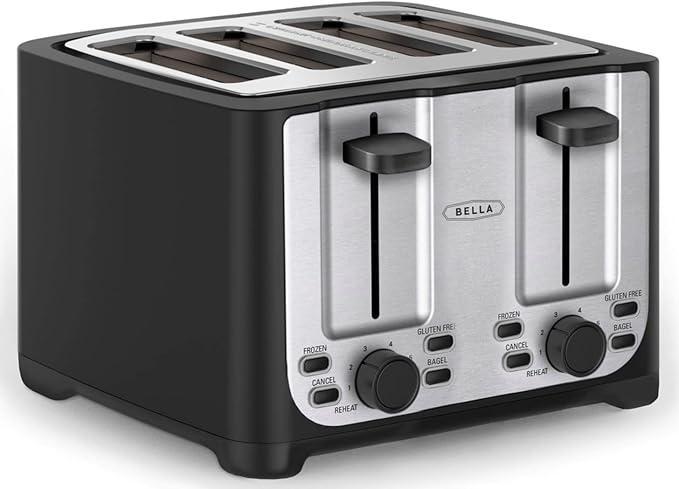
A four-slice toaster can save time for families and shared kitchens. Look for two separate control systems. If all four slots use one control, different users may not be able to choose different browning levels.
Typical price: $30 to $120, with premium models costing more.
Four-slice models also use more counter space. Measure the available area before buying, including room above the toaster for lifting the lever and room behind it for ventilation.
A larger toaster may also draw more power during use. The actual cost difference on an electric bill is usually small because toasting takes only a few minutes, but wattage still matters if you use the appliance many times each day.
Which Features Are Worth Paying For?
The most useful paid features are those that solve a real problem. A feature is worth the extra cost only if you will use it.
Wide or long slots
Wide slots help with thick bread, bagels, Texas toast, and some frozen foods. Long slots can fit larger artisan-style slices without cutting them first.
Check the actual slot dimensions when available. The words “wide slot” do not tell you how wide the opening is.
Bagel setting
A bagel setting usually changes which heating elements operate. The goal is to toast the cut side while warming the outside. It is useful if you eat bagels often.
It does not mean every bagel will fit. Large bagels may still need to be cut or placed carefully.
Frozen setting
A frozen setting usually adds time so frozen bread can thaw and toast. It can be useful for frozen waffles, bread, and pastries that are labeled for toaster use.
Follow the food package instructions. Do not place foods with loose fillings, icing, or grease in a toaster unless the manufacturer specifically permits it.
High-lift lever
A high-lift lever is one of the most practical features. It helps you remove small slices without putting your fingers near the heating area.
This feature may be more valuable than a digital screen or decorative finish.
Countdown timer
A timer shows how much time remains. It can make the appliance easier to use, but it does not prove that the toaster heats more evenly.
Digital or touch controls
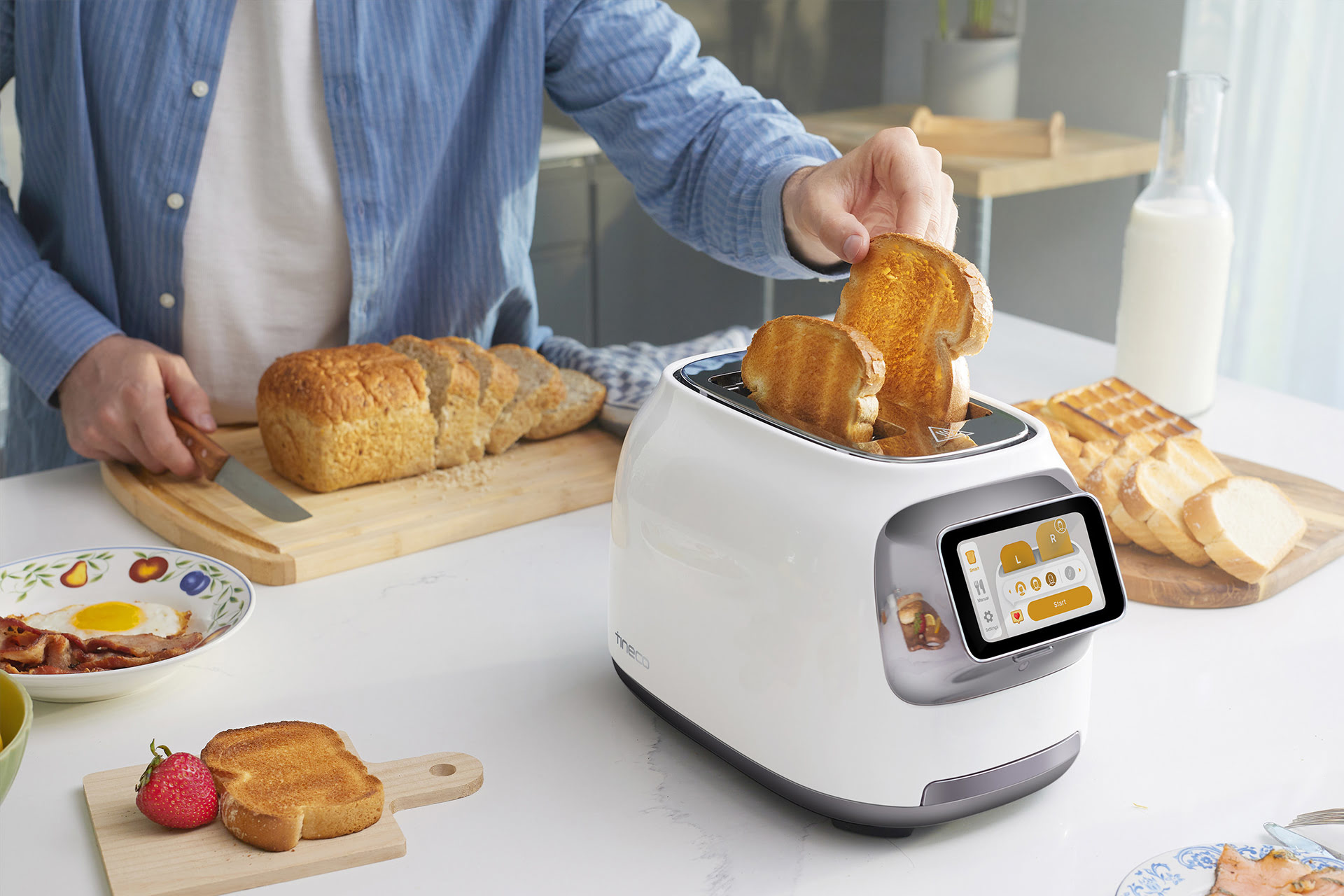
Digital controls may offer precise settings and a modern appearance. Mechanical dials are often simpler and may be easier to replace or use if the display fails.
Choose the control type that is easiest for you to read and repeat.
What Adds to the Long-Term Cost?
The purchase price is not the only cost. A toaster also uses electricity, takes up counter space, and may need replacement if it develops a fault.
Electricity use
A typical household toaster may use roughly 700 to 1,800 watts, depending on its size and design. The appliance runs for only a short time, so the energy cost per use is usually modest.
You can estimate the cost with this formula:
Cost per use = watts ÷ 1,000 × hours used × electricity rate
For example, a hypothetical 1,200-watt toaster used for 5 minutes at $0.18 per kilowatt-hour would cost about 2 cents per cycle:
1.2 kW × 0.083 hours × $0.18 = about $0.018
Your local electricity rate may be higher or lower. The U.S. Energy Information Administration publishes average residential electricity data, but local utility rates are the better figure for your home.
Warranty and replacement
A low-cost toaster may be cheaper to replace than to repair. Many household toasters are not designed for easy repair, and parts may be difficult to find.
Before buying, check:
- Warranty length
- What the warranty covers
- Whether shipping is your responsibility
- Whether the company offers replacement parts
- The retailer’s return window
A $50 toaster with a clear warranty may be a better value than a $25 toaster with poor support.
Cleaning and crumbs
Crumbs can affect performance and create a fire risk if they build up. A removable crumb tray makes routine cleaning easier.
Unplug the toaster and let it cool before cleaning. Empty the tray regularly. Do not insert knives, forks, or other metal tools into the slots.
How to Choose the Right Toaster for Your Budget
Use this short process before you buy.
1. Decide how many slices you need
Choose two slices for a small household or limited counter space. Choose four slices if several people toast at once.
2. Measure your bread
If you eat thick, large, or homemade bread, check the slot width and length. Standard bread may fit almost any toaster, but specialty bread needs more room.
3. Set a realistic price range
For most buyers:
- Under $30: Basic use
- $30–$70: Best general value
- $70–$120: Extra capacity or special design
- Over $120: Premium appearance or niche features
4. Compare useful features
Prioritize slot size, separate controls, high lift, cancel function, crumb tray, and warranty. Treat screens, lights, and special modes as secondary features.
5. Check safety information
Look for clear instructions from the manufacturer and a recognized product-safety certification mark, such as one from an organization that evaluates electrical products for the U.S. market. Certification marks should be genuine and tied to the actual model.
The U.S. Consumer Product Safety Commission advises consumers to follow appliance instructions, keep toasters away from water, and avoid inserting objects into them.
6. Review return terms
Toasting quality can vary from one model to another. A reasonable return policy matters if the toaster browns unevenly, cannot fit your bread, or feels unstable.
Common Toaster Buying Mistakes
The most common mistake is paying for features instead of solving a real need.
Buying by wattage alone
Higher wattage does not guarantee better toast. It may mean faster heating, but browning also depends on heating-element design, slot shape, controls, and timing.
Ignoring slot size
A toaster can have strong reviews and still be wrong for your bread. Check the dimensions before buying if you use thick slices, bagels, or homemade loaves.
Choosing four slots for a small kitchen
Four-slice models are useful, but they take more room. Make sure the appliance fits with enough space around it for safe use.
Assuming a higher price means better performance
Premium materials and design can increase the price without producing a major improvement in toast. Look for evidence of useful differences, not just a higher retail price.
Failing to clean the crumb tray
Crumbs can collect near heating elements. Empty the tray when it is cool and unplugged. Never shake a plugged-in toaster over a sink or use water inside the appliance.
Using unsafe foods
Do not place metal-wrapped food, utensils, or foods that can drip heavily into a toaster. Be careful with pastries, cheese, and items containing oil or sugar. Use the appliance only for foods and accessories approved by the manufacturer.
If a toaster sparks, smells strongly of burning plastic, shocks you, trips a circuit, or has a damaged cord, unplug it if you can do so safely and stop using it. Replace it or seek qualified electrical advice.
Good Toaster Cost: A Simple Recommendation
For most U.S. buyers, budget $40 to $70 for a good everyday toaster. Choose a two-slice model for a small household and a four-slice model when several people need toast at the same time.
Spend more only when you need long slots, separate controls, unusual bread capacity, premium design, or stronger support. Spend less when you use the appliance rarely and accept fewer features.
The best value is not the cheapest toaster. It is the model that fits your bread, counter, use pattern, and safety needs without charging for features you will not use.
Frequently Asked Questions
Is a $20 toaster good enough?
It can be good enough for occasional use with standard sliced bread. At this price, inspect the return policy, slot size, crumb tray, cord, controls, and safety information. Do not expect the same materials or consistency as a well-reviewed mid-range model.
Is an expensive toaster worth it?
Sometimes, but not for everyone. A premium toaster may be worth the cost if it solves a specific need, such as fitting long slices or matching a design-focused kitchen. A high price alone does not prove better browning or longer life.
How long should a good toaster last?
There is no single lifespan for every toaster. Use, cleaning, build quality, electrical conditions, and maintenance all matter. A toaster that shows damage, sparks, trips a breaker, or develops a burning smell should be removed from service regardless of age.
Should I buy a two-slice or four-slice toaster?
Buy a two-slice model if you have limited space or usually toast one or two slices. A four-slice model is more convenient for families, but it costs more and occupies more counter space. Separate controls are useful when people want different browning levels.
What is the safest way to clean a toaster?
Unplug it and let it cool. Empty the removable crumb tray and wipe the outside with a slightly damp cloth. Keep water out of the toaster, and never insert a knife or other metal object into the slots.
Final Takeaway
A good toaster costs about $30 to $80 in the U.S., with $40 to $70 offering the strongest balance for most households. Focus on slot size, even controls, high lift, a removable crumb tray, warranty support, and a design that fits your counter.
Before buying, measure your bread and your kitchen space. Then choose the least expensive model that meets those needs and comes from a manufacturer with clear safety instructions and return terms.
Sources and Research Notes
- U.S. Consumer Product Safety Commission: Appliance and electrical safety information
- U.S. Energy Information Administration: Residential electricity data
- Underwriters Laboratories: Product safety and certification information
- Manufacturer instruction manuals and warranty pages should be checked for the exact model, slot dimensions, approved foods, cleaning steps, and electrical specifications.