How Many Volts Is A Toaster: Power Guide
Introduction
Most toasters sold for use in the United States are rated at 120 volts AC (V AC), 60 hertz (Hz). This matches the standard household power supplied by typical US wall outlets. A toaster may use about 800 to 1,500 watts, which means it can draw roughly 6.7 to 12.5 amps while heating.
Check the rating label on the toaster before plugging it in. The label, manual, or manufacturer’s website gives the exact voltage and power needs for that model.

Quick Answer: How Many Volts Does a Toaster Use?
A standard US toaster uses 120 volts from a normal household outlet.
Here is the basic information:
| Toaster type | Typical voltage in the United States | Common power range |
|---|---|---|
| Two-slice toaster | 120 V AC | About 750–1,000 W |
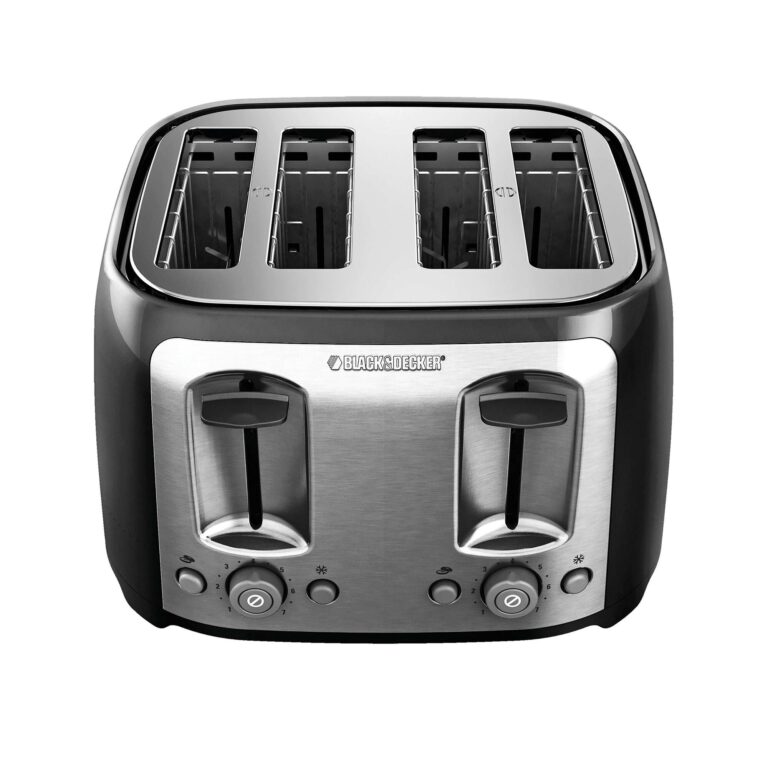
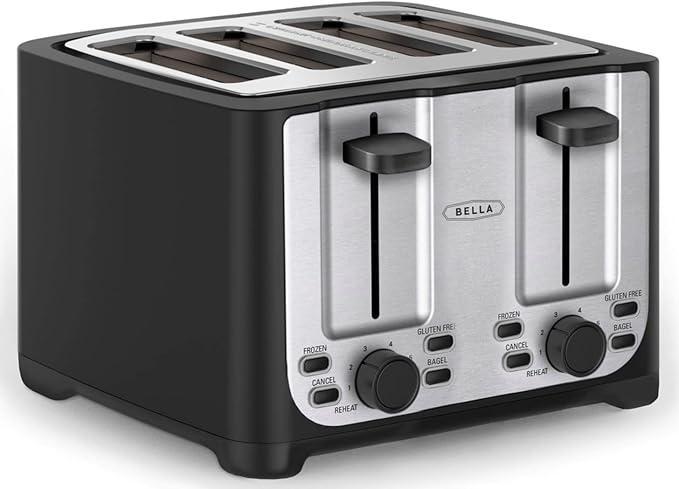
| Four-slice toaster | 120 V AC | About 1,200–1,500 W |
| Toaster oven | Usually 120 V AC | About 1,200–1,800 W |
| Commercial toaster | Depends on the model | Often 120 V or 208–240 V |
The voltage tells you the electrical pressure supplied to the toaster. The wattage tells you how much power the toaster uses. These are related, but they are not the same measurement.
A toaster designed for the US should show a label similar to:
- 120 V
- 120 VAC
- 120 volts, 60 Hz
- 120 V AC, 1,500 W
The exact label may differ by brand and model.

Why US Toasters Use 120 Volts
US homes normally use electrical systems based on a nominal 120-volt supply for standard wall outlets. Small kitchen appliances, lamps, televisions, and chargers often use these outlets.
A toaster contains metal heating elements. When electricity passes through those elements, resistance turns electrical energy into heat. That heat browns the bread.
The toaster does not usually change the household voltage into a lower voltage. Its heating elements are built to work with the voltage supplied by the outlet. Some internal parts, such as timers or electronic controls, may use additional components to manage the power.
The “nominal” value matters. A wall outlet may not measure exactly 120 volts at every moment. The measured voltage can vary because of utility conditions, wiring, distance from the service panel, and the electrical load in the home. Small changes are normal, but a toaster should still be used only within the voltage range listed by its manufacturer.

How Many Watts and Amps Does a Toaster Use?
A toaster’s wattage depends on its size, heating speed, number of slots, and extra features. Many household models use between 800 and 1,500 watts.
You can estimate current with this formula:
Amps = Watts ÷ Volts
For a 120-volt US outlet:
| Toaster power | Calculation | Approximate current |
|---|---|---|
| 800 W | 800 ÷ 120 | 6.7 A |
| 1,000 W | 1,000 ÷ 120 | 8.3 A |
| 1,200 W | 1,200 ÷ 120 | 10 A |
| 1,500 W | 1,500 ÷ 120 | 12.5 A |
| 1,800 W | 1,800 ÷ 120 | 15 A |
These figures are estimates. A toaster’s actual current can change as its heating elements cycle on and off.
A 1,500-watt toaster can draw about 12.5 amps when its heating elements are fully on. That is a large share of a 15-amp household circuit. Other appliances on the same circuit can push the total load too high.

What Voltage Is a Two-Slice or Four-Slice Toaster?
Both two-slice and four-slice toasters made for the US generally use 120 volts.
The main difference is often power use:
- A two-slice toaster may use around 750 to 1,000 watts.
- A four-slice toaster may use around 1,200 to 1,500 watts.
- Some large or fast-heating models may use more than 1,500 watts.
A four-slice toaster does not automatically need a different voltage. It may simply have more heating elements or a higher total wattage.
Read the nameplate rather than guessing from the number of slots. The nameplate may be on the bottom, back, or side of the toaster. It may list voltage, wattage, amperage, frequency, or a combination of these values.

Can You Plug a US Toaster Into Any Outlet?
You can plug a US toaster into a properly wired US outlet that matches its voltage and plug type. Do not assume that every outlet is safe just because the plug fits.
Before use, check these points:
- Confirm the voltage. The toaster should be rated for about 120 V AC if you are using a standard US outlet.
- Inspect the cord and plug. Do not use a toaster with exposed wires, melted plastic, burn marks, or a loose plug.
- Keep the toaster dry. Never place it near standing water or use it with wet hands.
- Avoid overloaded circuits. Do not run several high-power appliances from the same outlet or circuit.
- Keep the toaster clear. Place it on a stable, heat-resistant surface away from curtains and other flammable items.
- Unplug it before cleaning. Let it cool first, and do not immerse it in water.
A toaster is a high-power heating appliance. It should plug directly into a wall outlet whenever possible. A power strip or lightweight extension cord may overheat if it cannot safely handle the toaster’s current.

Is a Toaster Safe on a 15-Amp Circuit?
A typical toaster can operate on a 15-amp circuit, but the toaster may use much of that circuit’s capacity.
For example, a 1,500-watt toaster draws about 12.5 amps at 120 volts. If another appliance draws 5 amps on the same circuit, the combined load would be about 17.5 amps. That may trip a circuit breaker or create unsafe heat in wiring or connections.
The circuit rating applies to the total load, not just one outlet. A kitchen circuit may supply several outlets, so another appliance elsewhere in the kitchen could affect the toaster.
Use extra care with combinations such as:
- Toaster and coffee maker
- Toaster and microwave oven
- Toaster and electric kettle
- Toaster oven and air fryer
- Toaster and portable hot plate
If a breaker trips repeatedly, stop using the combination. Do not replace the breaker with one that has a higher rating. A licensed electrician can check the circuit, wiring, outlet condition, and load.

How to Read a Toaster’s Electrical Label
The electrical label gives the safest answer for a specific toaster. Look for it on the bottom, back, power cord, or product packaging.
Common markings include:
Voltage
This may appear as:
- 120 V
- 120 VAC
- 110–120 V
- 115 V
“AC” means alternating current, which is the type of power supplied by standard US household outlets.
Frequency
US household electricity is normally 60 Hz. A toaster may show:
- 60 Hz
- 60 Hertz
- 50/60 Hz
A toaster marked 50/60 Hz can usually work with either frequency when the voltage is also correct. Frequency compatibility does not make an incorrect voltage safe.
Wattage
The label may show:
- 900 W
- 1,200 W
- 1,500 W
A higher wattage often means more power use. It does not necessarily mean the toaster will brown bread better, because heating design and control also matter.
Amperage
Some labels list current directly, such as:
- 8 A
- 12.5 A
- 15 A
If both watts and amps are shown, use the manufacturer’s information rather than relying only on an estimate.

Can You Use a US Toaster in Another Country?
Usually, no. Many countries use a different household voltage, such as 220–240 volts. Plug shape is not the only issue.
A US toaster rated for 120 volts may be damaged or become a fire hazard if connected directly to a 220–240-volt outlet. A simple plug adapter changes the shape of the plug, but it does not change the voltage.
A voltage converter or transformer may reduce voltage, but it must be rated for the toaster’s full wattage. High-power heating appliances need a large, suitable transformer. Even then, the setup may be bulky, inefficient, and unsuitable for long-term use.
The safer option is usually to buy a toaster designed for the electrical system in the country where it will be used. If you are traveling, confirm all of these details:
- Input voltage
- Frequency
- Plug shape
- Wattage
- Converter or transformer capacity
- Manufacturer travel restrictions
Do not use a dual-voltage assumption unless the toaster’s label clearly says it supports the destination voltage.

What Happens If a Toaster Gets the Wrong Voltage?
The wrong voltage can damage the toaster and create a safety risk.
If a 120-volt toaster receives 240 volts
The heating elements may become much hotter than intended. In a simple resistive heater, doubling the voltage can increase the theoretical power by about four times because power is related to the square of voltage:
Power = Voltage² ÷ Resistance
Actual results depend on the toaster’s design and protective parts, but the risk can include:
- Burned heating elements
- Melted insulation
- Smoke or fire
- Tripped breakers
- Permanent appliance damage
If a 120-volt toaster receives much less voltage
The toaster may heat slowly, brown bread poorly, or fail to work correctly. Low voltage can also cause some appliances to behave unpredictably.
Unplug the toaster if it produces smoke, sparks, a burning smell, unusual sounds, or excessive heat. Do not open the toaster unless you are trained and qualified to repair electrical appliances. Internal parts can remain hazardous even after the plug is removed.

Voltage, Wattage, and Amperage: What Is the Difference?
These three terms describe different parts of the same electrical system.
- Voltage is the electrical potential supplied to the appliance.
- Amperage is the amount of electrical current flowing through it.
- Wattage is the rate at which the toaster uses electrical power.
The basic relationship is:
Watts = Volts × Amps
For a 1,200-watt toaster on a 120-volt supply:
1,200 W = 120 V × 10 A
This helps explain why a toaster can use more electricity than many small electronics. A phone charger may use only a few watts, while a toaster uses hundreds or more than 1,000 watts to create heat.
Voltage alone does not tell you the toaster’s energy use. Two toasters may both use 120 volts but have different wattages and heating times.

How Much Electricity Does a Toaster Use?
A toaster uses electricity only while its heating elements are active. You can estimate energy use with this formula:
Energy used in kilowatt-hours = Watts ÷ 1,000 × hours used
For a hypothetical 1,200-watt toaster used for five minutes:
1.2 kW × 0.083 hours = about 0.10 kWh
The actual cost depends on your electric rate. To estimate cost:
Cost = Energy used in kWh × electricity price per kWh
For example, if electricity costs $0.20 per kWh:
0.10 kWh × $0.20 = about $0.02
This is only an example. Toasting time, thermostat cycling, repeated batches, and the toaster’s rated wattage affect actual use.
The toaster’s voltage does not directly tell you how much it costs to operate. Wattage and operating time matter more.

Common Mistakes With Toaster Voltage
Several common mistakes can damage a toaster or raise the risk of electric shock and fire.
Confusing volts with watts
A toaster labeled 1,500 watts is not a 1,500-volt appliance. Most US household toasters use about 120 volts and may draw up to 1,500 watts.
Using a plug adapter as a voltage converter
A plug adapter changes the plug shape only. It does not make 240 volts safe for a 120-volt toaster.
Ignoring the circuit load
A toaster may work normally by itself but trip the breaker when used with another high-power appliance.
Using an extension cord without checking its rating
A thin or damaged extension cord can heat up under a toaster’s load. Direct wall connection is preferable.
Removing stuck bread with a metal object
Unplug the toaster and let it cool before removing stuck food. Never insert a knife, fork, or other metal object into a plugged-in toaster.
Continuing to use a damaged toaster
Cracked housing, frayed cords, scorch marks, and repeated sparking are reasons to stop using the appliance. Repair or replace it through a qualified service channel.

When Should You Replace or Stop Using a Toaster?
Stop using a toaster if you notice any of these signs:
- The cord or plug feels hot
- The outlet is discolored or warm
- The toaster sparks repeatedly
- The toaster gives off a burning plastic smell
- The breaker trips when the toaster runs
- The lever will not stay down
- The casing is cracked or melted
- The heating elements glow unevenly or appear damaged
- The toaster has been exposed to water
A single pop from crumbs or normal heating sounds may not mean the toaster has failed. Repeated sparks, smoke, or a persistent burning odor are different. Unplug the toaster and have it assessed or replace it.
Do not bypass a fuse, remove grounding features, or use a damaged plug. For a warm outlet, loose receptacle, or recurring breaker problem, contact a qualified electrician.

Key Takeaways
- A standard toaster in the United States uses 120 volts AC.
- Most US toasters are designed for 60 Hz household electricity.
- Common toaster power ratings range from about 800 to 1,500 watts.
- A 1,500-watt toaster draws about 12.5 amps at 120 volts.
- Check the toaster’s label for its exact voltage and wattage.
- Do not plug a 120-volt toaster directly into a 220–240-volt outlet.
- Use a wall outlet when possible, and avoid overloading the circuit.
- Unplug the toaster before cleaning or removing stuck bread.
Frequently Asked Questions
Is a toaster 110 volts or 120 volts?
A US toaster is generally rated at 120 volts, although some labels may say 110–120 volts or 115 volts. “110 volts” is a common informal term for the US household supply, but the modern nominal rating is 120 volts.
Does a toaster use a lot of electricity?
A toaster uses high power while it runs, often 800 to 1,500 watts, but it usually operates for only a few minutes at a time. Its total energy use per day depends on how long and how often you use it.
Can a toaster run on a 20-amp outlet?
A typical US toaster can operate on a properly wired 20-amp circuit if its plug and rating are compatible. The circuit’s total load still matters. Do not assume that a 20-amp circuit makes every appliance combination safe.
Can I use a 120-volt toaster with a 220-volt converter?
Only if the converter is specifically designed for the toaster’s wattage and the manufacturer allows that setup. Because toasters are high-power heating appliances, using a toaster made for the local voltage is usually the safer and simpler choice.
Why does my toaster trip the breaker?
The circuit may be overloaded, the toaster may have an electrical fault, or the breaker or wiring may have a problem. Unplug the toaster and avoid repeated resets. If the issue continues, have the appliance and circuit checked by qualified professionals.
Conclusion
A normal toaster sold for use in the United States is usually a 120-volt AC appliance. Its wattage commonly falls between 800 and 1,500 watts, so it can draw a substantial amount of current from a kitchen circuit.
For the exact answer, read the toaster’s rating label. Match the voltage, consider the total circuit load, and stop using the appliance if the cord, plug, outlet, or toaster shows signs of damage.